Author Archives: R-B

MAXIM’s DeepCover MAXQ1050 Secure Microcontroller to protect your embedded systems from Malware
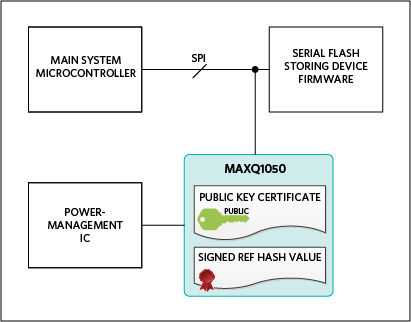
Malware injection has become a critical threat to embedded systems. Implementing an asymmetric cryptography-based secure boot is the best protection against this class of attacks. This application note from MAXIM describes the key principles of such a secure boot and explains how to implement it with the DeepCover® MAXQ1050 secure microcontroller.
DeepCover Secure Microcontroller

Embedded systems security is a growing concern. There are new attacks on embedded systems every day, including on systems involved with health or safety. One type of attack is malware injection, the insertion of malicious code into a webpage. Once an attacker has succeeded in making a device run a fraudulent piece of software, this unauthorized software can:
  • Send confidential data externally. If used in the medical industry, malware injection could cause devices (such as a portable ECG) to inadvertently transmit personal health information. In perhaps a more wide-reaching effort, malicious software could make an encryption key to accessible to the public.
  • Force the device to operate incorrectly. A famous example of this is the Stuxnet virus, which after infecting programmable logic controllers (PLCs), forced centrifuges to run at different speeds than expected.
  • Induce an unpredictable device behavior. This includes behaviors that could threaten human life.
A properly secured boot process allows only authorized software to run on a given device. It thus prevents malware injection, even during update phases. To bring a high level of trust, a secure boot must rely on proven cryptographic algorithms. This, however, creates several challenges:
  • The most appropriate algorithms are asymmetric ones, which require intensive computing power.
  • The keys associated with these algorithms must be protected.
  • The implementation must be flawless.
In many systems, these requirements can be challenging to implement. However, adding a secure microcontroller as a coprocessor like the MAXQ1050 can efficiently support a secure boot implementation while guaranteeing a very high level of security.

Desk panic button to get rid of annoying coworkers

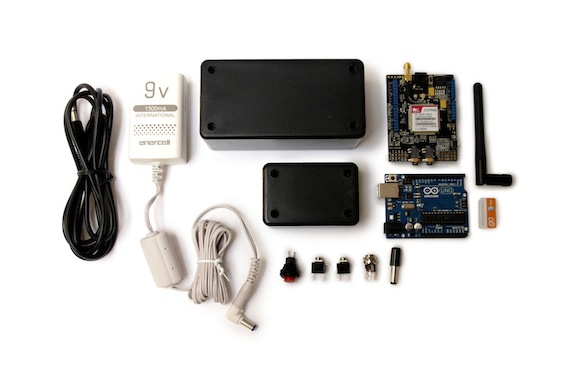
Workplace is a jumble of many different personalities and we all find some difficult people to deal with. If you are often annoyed by your coworkers who just walk over to your desk and rope you into long conversations that never end when you’re on deadline, Randy Sarafon’s (from Instruclables) desk panic button will help you get rid of them without hurting their feelings. Unlike other panic buttons, this one does not summon for help in emergency. The idea is when it is pressed it calls your own phone so that you can tell your coworker that you need to answer to this very important call and he may leave. The key components to build this desk panic button are an Arduino board, a GPRS shield and a sim card.

Desk panic button that keeps annoying coworkers away

All you need to make this desk panic button

Chirp: An open source plant watering alarm using Attiny44A

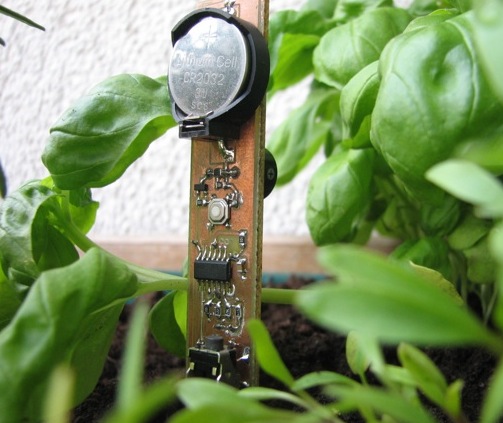
Your favorite plants need plenty of water to grow. If you keep forgetting to water your house plants you might be interested in this plant watering alarm device called Chirp. Chirp uses capacitive humidity sensing technique to measure the moisture level in the soil and alerts the user through short chirps when it is time to water the plant. Based on the amount of ambient light detected by the on-board light sensor, Chirp detects day and night condition. It is very considerate and remains silent during the night time. The project uses ATtiny44A and is licensed under CERN Open Hardware Licence v.1.1.

Chirp: Plant watering alarm

Proper PCB grounding for mixed-signal designs

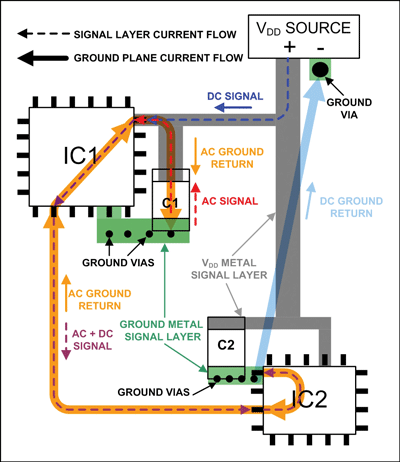
Circuit board designers have always concerns about the proper way to handle grounding for integrated circuits (ICs), which have separate analog and digital grounds. This tutorial from MAXIM integrated discusses proper printed-circuit board (PCB) grounding for mixed-signal designs. For most applications a simple method without cuts in the ground plane allows for successful PCB layouts with this kind of IC. Next, we learn how to place components and route signal traces to minimize problems with crosstalk. Finally we move on to consider power supply-currents and end by discussing how to extend what we have learned to circuits with multiple mixed-signal ICs.

Grounding in PCB designs

Raspberry Pi based surveillance system for an injured bird

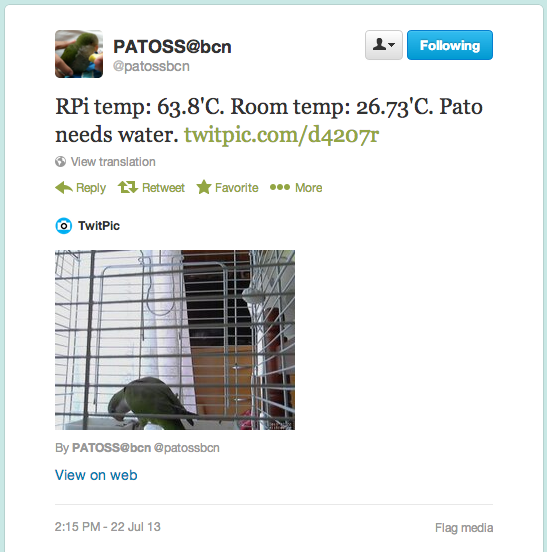
Jorge Rancé found a wounded bird on street which he brought home. Until the bird gets recovered completely, he needed a tool to monitor the health progress of the bird from remote when he is not at home. He built this raspberry Pi based surveillance system that not only feeds live video of the injured bird through internet but also tweets automatically every hour to update the surrounding ambient temperature as well as the level of drinking water in a vessel for the bird. Here’s one snapshot of a tweet it made.

Raspberry Pie tweeting the environmental parameters

« Older Entries Recent Entries »