Author Archives: R-B

Making a digital color sensor using RGB LED and photo-cell
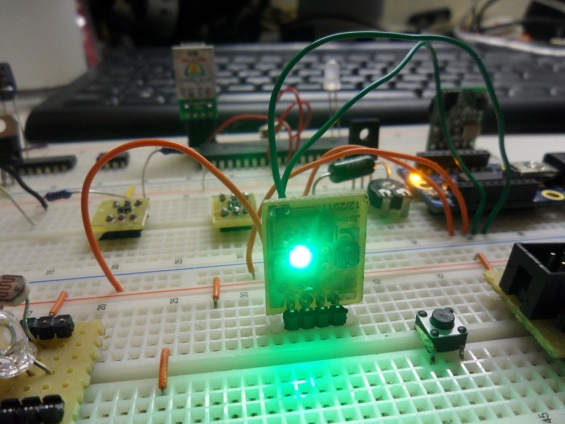
Electronic color sensors find applications in many automated processes such as sorting objects by color, detecting presence of a color coating, etc to improve quality at production line speeds. The fundamental principle of color detection is very simple. You can use an RGB LED and a basic light dependent resistor (LDR) to construct a simple color sensor. The idea is to illuminate a sample material with three primary colors (red, green, and blue), one at a time, and measure the reflected amount of light using the LDR. Each material reflects different combination of red, green, and blue light. For example, the material with red color reflects red light the most. So the LDR response would be higher to the reflected red light than the other two colors. Thus, measuring the amount of light reflected from the sample surface under illumination from red, green, and blue LED individually, the color of the sample surface can be identified.
Color sensor using RGB LED and LDR

Read more

Application of ambient light sensors (ALS) in portable electronics

ROHM Semiconductors presents this white paper on the Applications of Ambient Light sensors in Portable Electronics.

Application of ALS in portable electronics

In portable electronic products, reducing the power consumption to provide the user with increased battery life is one of today’s critical design considerations. The liquid crystal display (LCD) and its associated backlighting are among the more (and frequently the most) power hungry loads in portable products. As a result, the use of an ambient light sensor (ALS) to optimize the operation of the backlight LEDs under a variety of environmental lighting situations is increasing while, at the same time, the preferred technology choices available to designers for sensing have shifted towards more integrated solutions. One very important application for ALS technology is cell phones. In a cell phone, the ALS enables automatic control of display backlight brightness over a wide range of illumination conditions from a dark environment to direct sunlight. With the ALS input, a microcontroller (MCU) or baseband processor increases or decreases the display brightness depending on the environment. This control dramatically improves visibility and reduces power consumption since LCD backlighting can draw as much as 51% of the power in the input standby mode.

Universal TV sleep timer project

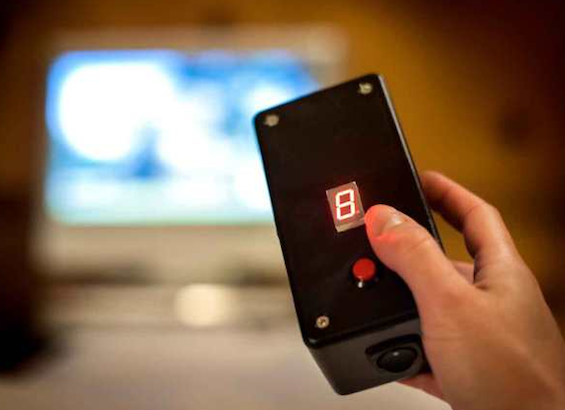
This TV-Go-Sleep timer turns off any TV after a preset delay time. This project is built around an Arduino microcontroller that uses an open source TV-B-Gone library. The hardware part consists of a pushbutton switch to set the delay time, which is shown on a 7-segment display. When the timer expires, the Arduino transmits “Turn OFF” codes for all known TVs through IR LED, and the TV shuts down.

Universal TV sleep timer

mbed powered automated Sun tracker

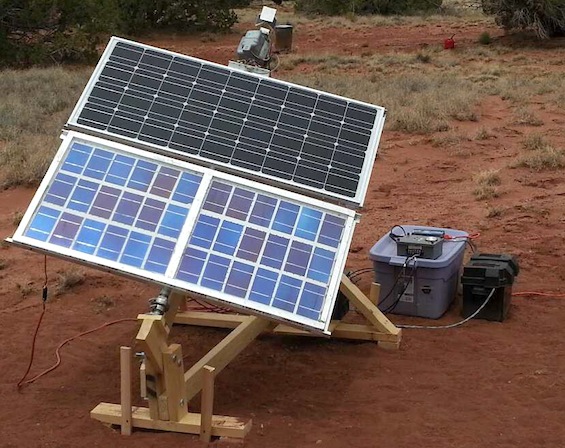
Maximizing power output from a solar system is desirable to increase efficiency. One way of maximizing power output is by keeping the solar panels always aligned with the sun. This requires a means of tracking the sun. Here is an mbed powered solar tracker that continuously keeps track of the sun and points the solar panels directly towards the sun all the time.

mbed powered solar tracker

The project uses two smaller solar cells (besides the large solar pannels) placed right angle to each other. The alignment of the big solar panels and smaller solar cells is such that when the solar panels are directly facing to the sun, the output voltages from then two smaller cells are almost equal. The mbed microcontroller reads the voltages via two of its analog inputs, compare them, and rotates a motor connected to the antenna rotator to move it so as to keep the voltages from the two solar cells nearly equal.

Arduino cell phone

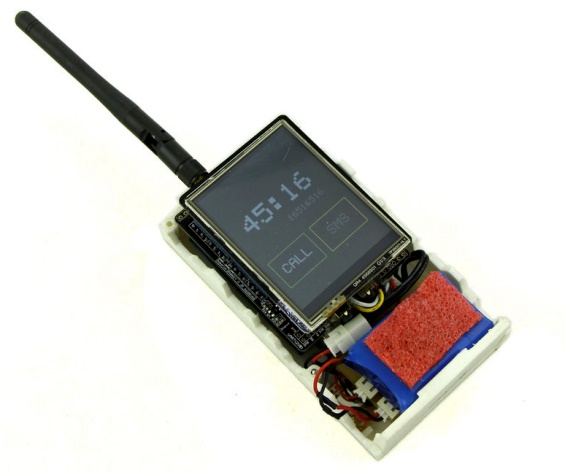
This instructable describes how to make a DIY GSM phone using Arduino Uno and GSM/GPRS shield. The project uses a TFT LCD with touch screen to provide an user interface required to operate the phone. This Arduino phone can receive & send message, dial & answer phone calls, and display real time clock.

DIY Arduino cellphone

« Older Entries Recent Entries »