Author Archives: R-B

PC-based heart rate monitor using Arduino and Easy Pulse sensor
The heart rate, also referred to as pulse rate, has been recognized as a vital sign since the beginning of medicine, and it is directly related to a person’s cadiovascular health. Today, we are going to make a PC-based heart rate monitor system using an Arduino board and Easy Pulse V1.1 sensor. Easy Pulse is a pulse detecting sensor that uses the principle of transmission photo-plethysmography (PPG) to sense the pulse signal from a finger tip. The sensor output is read by the Arduino board, which then transfers the data to the PC through a serial interface. A PC application is developed using Processing programming language to display the received PPG signal and instantaneous heart rate.
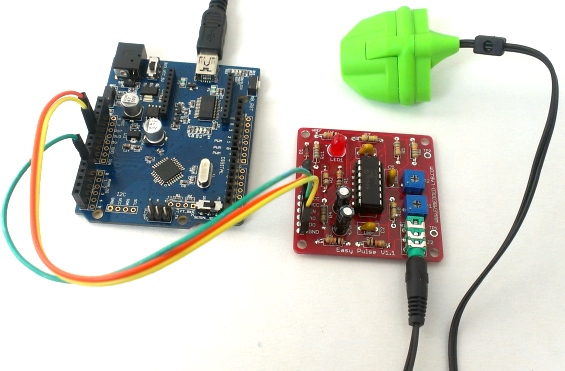
Arduino pulse meter
Read more

Weekend offer: 30% OFF on 8-digit (double row) SPI 7-segment LED displays

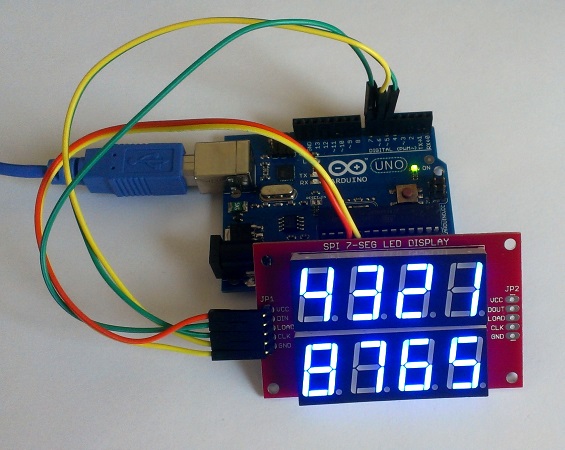
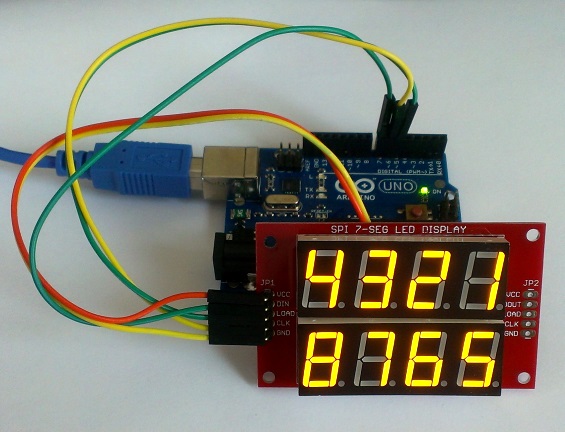
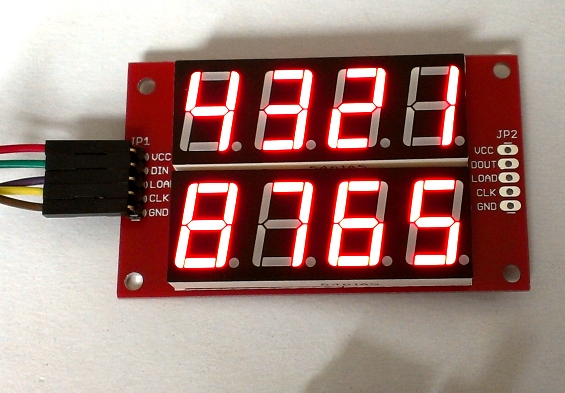
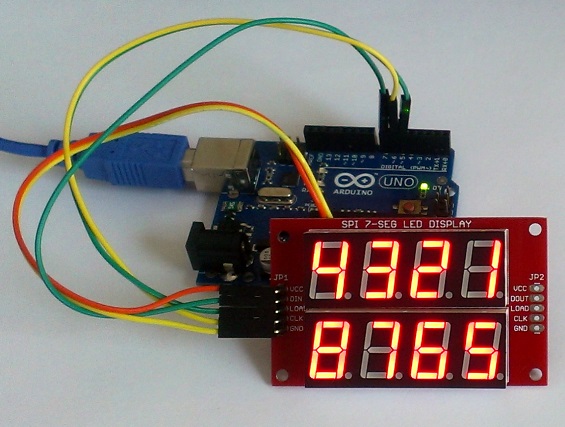
We are offering 30% OFF (coupon code BDEA254) on SPI7SEGDISP8.56-2R this weekend (May 31 – Jun 2, 2012). SPI7SEGDISP8.56-2R is a MAX7219-based seven segment LED display board with 8-digits which are arranged in two rows of four. The MAX7219 allows you full control of all the digits and decimal points through three I/O pins of a microcontroller. The communication interface is SPI-compatible, and the brightness of the LED segments can be controlled through software.

SPI7SEGDISP8.56-2R: MAX719-based seven segment LED display module


Key Features:

  • 3-wire SPI interface
  • double row of 4-digit displays (0.56″)
  • operates at +5V supply
  • individual control of all digits and decimal points
  • 16 levels of display brightness through software
  • PCB dimensions 2.8″ x 1.7″ (70mm x 42mm)
  • Two or more of these modules can be cascaded in series

Since it requires only 3 I/O pins, this display module can also be used with low pin-count microcontrollers (such as PIC12F series). Visit my MAX7219 tutorial page for more detail on MAX7219 and PIC12F683 interfacing example. With Arduino, it can be easily interfaced using the LedControl library.

It is available in three LED colors: Red, Blue, and Yellow. The buying links are provided at the end.

SPI7SEGDISP8.56-2R (Red)

SPI7SEGDISP8.56-2R (Blue)

SPI7SEGDISP8.56-2R (Yellow)

Tindie buying links:

SPI7SEGDISP8.56 buying link – Red color

SPI7SEGDISP8.56 buying link – Yellow color

SPI7SEGDISP8.56 buying link – Blue color

Use a coupon code BDEA254 to get 30% OFF, which is valid from May 31 – Jun 2, 2012.

Easy Pulse Sensor is now also available from Elecrow

Easy Pulse, a DIY pulse sensor based on the principle of photoplethysmography, is now also sold by Elecrow, our China-based collaborator, for only $18.50 and ships world-wide through a registered parcel for less than $5. We encourage international buyers to get it from Elecrow because they can save money shipping, and the shipment comes with a tracking number. US customers, however, would still be able to buy it from our Tindie store.

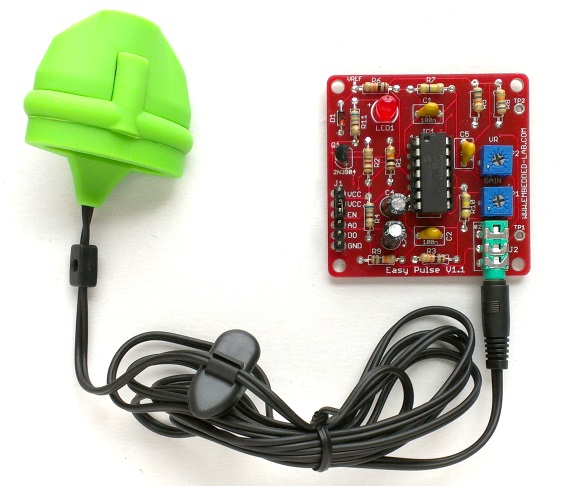
Easy Pulse sensor (Version 1.1)

If you are not familiar with Easy Pulse,

Easy Pulse is a DIY pulse sensor that can be used for detecting the cardio-vascular pulse wave from a fingertip. It is designed for hobby and educational applications to illustrate the principle of photoplethysmography (PPG), which is a non-invasive optical technique of retrieving vital information about the cardiovascular system from the skin surface. It uses an infrared light source to illuminate the finger on one side, and a photodetector placed on the other side measures the small variations in the transmitted light intensity. The variations in the photodetector signal are related to changes in blood volume inside the tissue. The signal is filtered and amplified to obtain a nice and clean PPG waveform, which can be thus used to derive the instantaneous heart rate. The Easy Pulse sensor also provides a digital pulse output which is synchronous with the heart beat.

More information on Easy Pulse: Click here

Buy Easy Pulse online

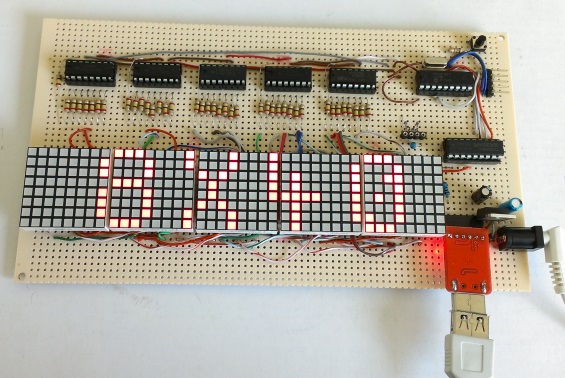
Making a 8×40 LED matrix marquee using shift registers

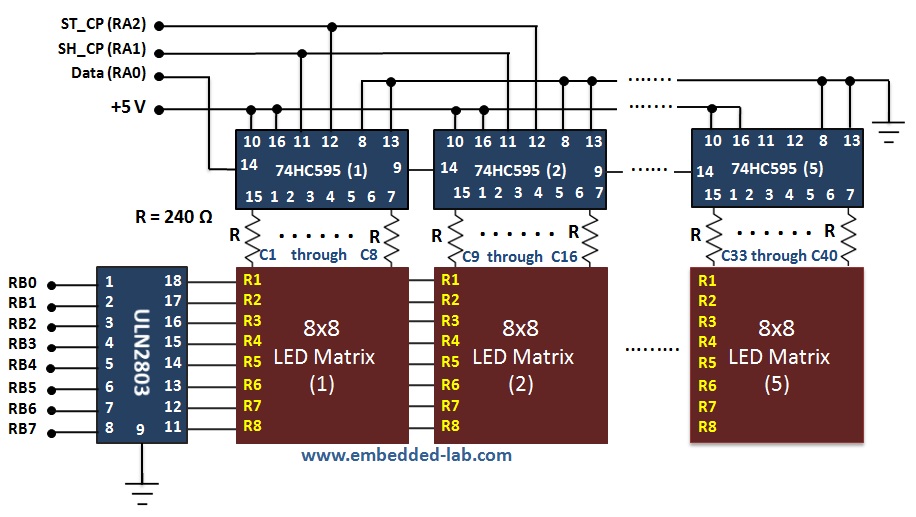
LED matrix displays provide flexibility to display text, graphics, animations, and video, and therefore, they have become a popular mean of displaying information these days. You can see them at gas stations displaying the gas prices, or in the public places displaying information, and alongside highways displaying advertisements on large dot matrix panels. This project is about constructing a mono-color LED matrix display board that consists 320 LEDs arranged in 8 rows and 40 columns. The heart of this project is PIC16F1847 microcontroller which receives data from a PC through a serial port (or USB using an USB-UART interface), and display on the LED matrix with the help of five 74HC595 shift registers.

8x40 LED Matrix Display

Read more

Easy Pulse Sensor (Version 1.1) Overview (Part 2)

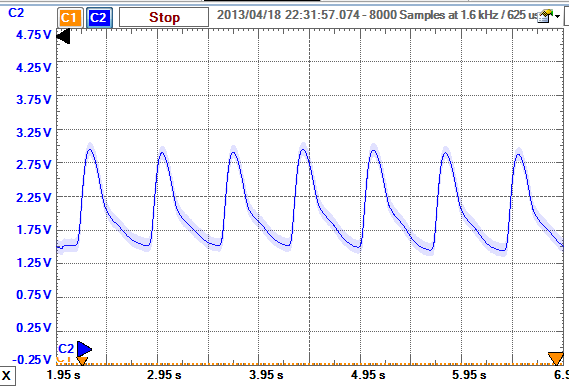
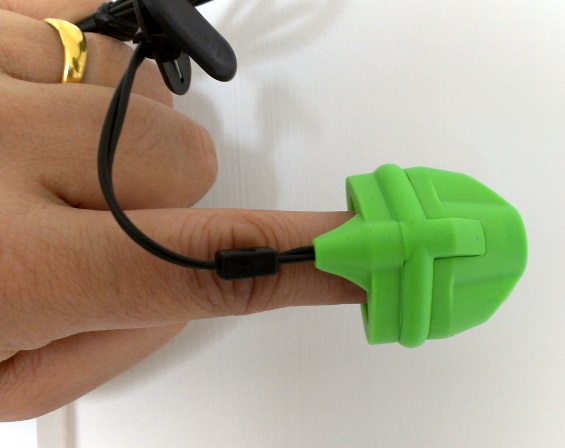
In Part 1 of this article, we briefly discussed about the principle of Photoplethysmography (PPG) and its applications in retrieving vital information about the cardiovascular system. The Easy Pulse sensor allows you to measure the pulse rate from fingertip using the transmission mode PPG. The Easy Pulse Version 1.1 uses the HRM-2511-E sensor that fits comfortably onto fingertip. Inside the sensor there is an IR LED that illuminates the finger from one side. A photodetector placed on the opposite side and facing towards the IR LED detects the transmitted light through the finger. The little variations in the transmitted light intensity are synchronous with blood volume changes and hence with the pumping action of the heart. The on-board electronics filters out the noise from the PPG signal and amplifies the signal so that it is readable by a microcontroller. In this part, we continue our discussion of Easy Pulse Version 1.1 and analyze the output signals at various stages of instrumentation.

Easy Pulse sensor (Version 1.1)

Read more

« Older Entries Recent Entries »