Author Archives: R-B

Mini project board for PIC12F series microcontrollers
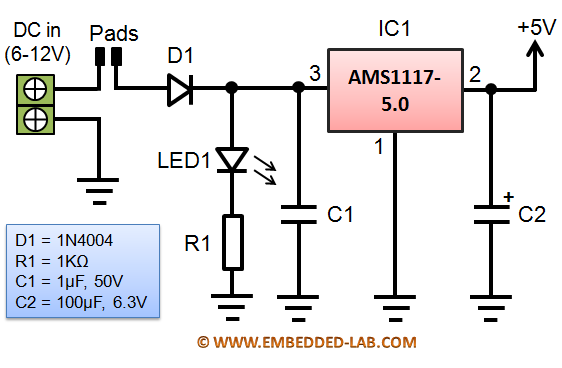
The 12F series of PIC microcontrollers are handy little 8-pin devices designed for small embedded applications that do not require too many I/O resources, and where small size is advantageous. These applications include a wide range of everyday products such as hair dryers, electric toothbrushes, rice cookers, vacuum cleaners, coffee makers, and blenders. Despite their small size, the PIC12F series microcontrollers offer interesting features including wide operating voltage, internal programmable oscillator, 4 channels of 10-bit ADC, on-board EEPROM memory, on-chip voltage reference, multiple communication peripherals (UART, SPI, and I2C), PWM, and more. The following project board is designed for fast and easy development of standalone applications using PIC12F microcontrollers. It features an on-board regulated +5V power supply, header connectors to access I/O pins, an ICSP header for programming, a reset circuit, and a small prototyping area for placing additional components.
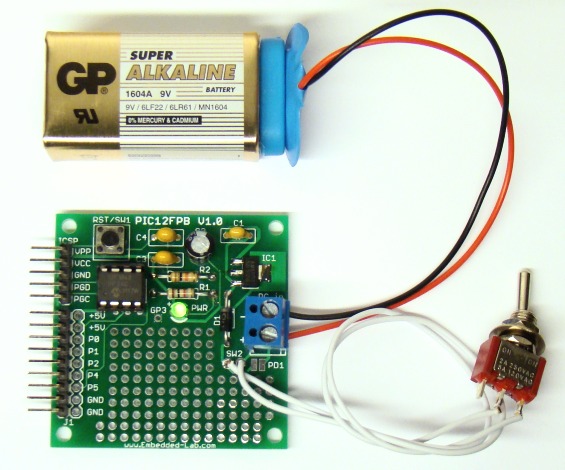
PIC12F development board
Read more

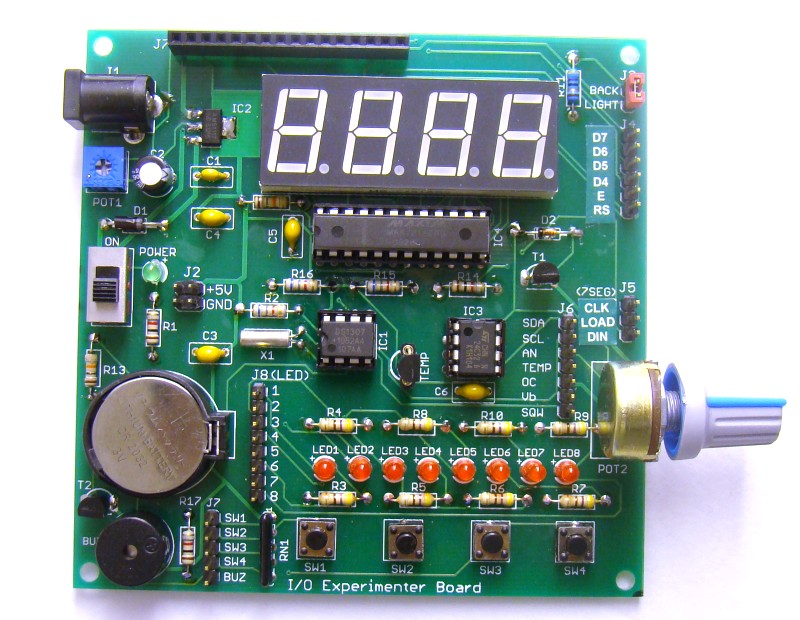
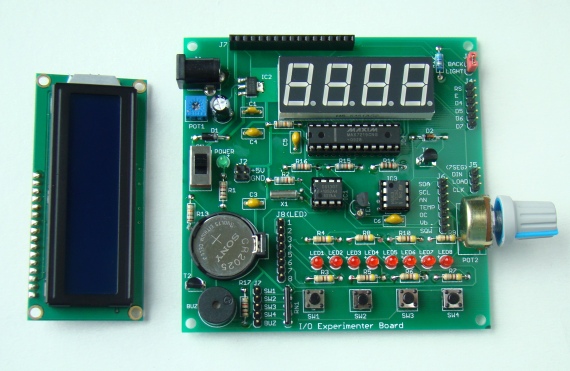
I/O Experimenter Board (PCB version)

Most embedded projects require the same common stuff, basically I/O devices such as switches, LEDs, LCD display, buzzer, etc. Connecting these things on a breadboard for prototyping every new project is time consuming and boring. Recently, I have designed a general purpose I/O experimenter board that will not only reduce the prototyping time for a new project but also free up plenty of space on the breadboard.

I/O Experimenter Board

Read more

Assembly instructions for Easy Pulse kit

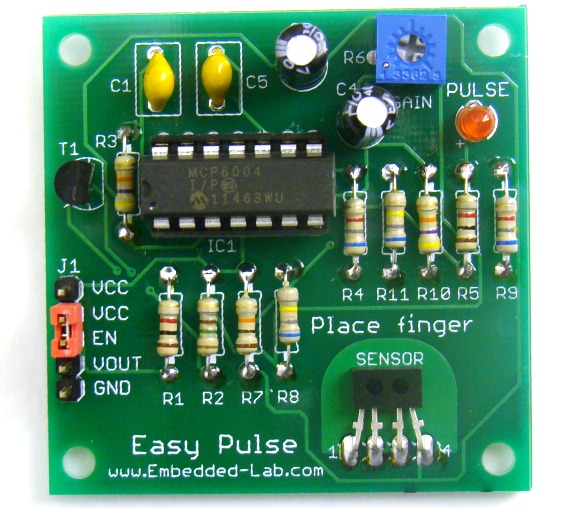
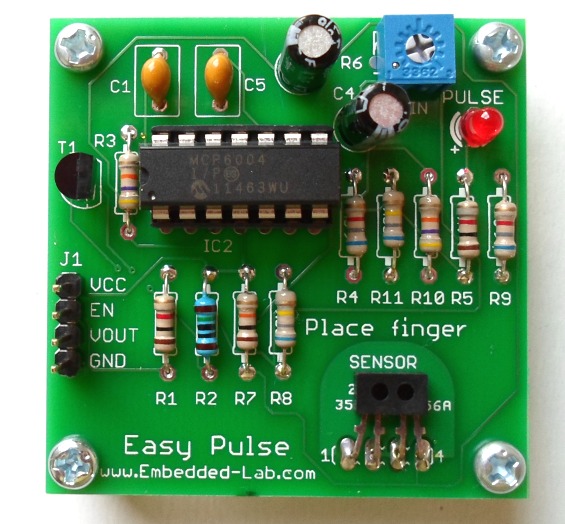
Assembling Easy Pulse kit is pretty simple and straightforward. There are two versions of PCBs which are mostly the same. In the second version the J1 connector has 5 pins instead of 4. I have added an additional VCC pin next to the EN pin. This would allow users to test the board quickly after being assembled. You can activate the sensor by simply placing a jumper between the EN and VCC pins, and the board is ready for operation. While soldering the parts, start with low profile components such as resistors and capacitors. This makes overall soldering process easier.

Version 1

Version 2 with additional VCC pin and jumper

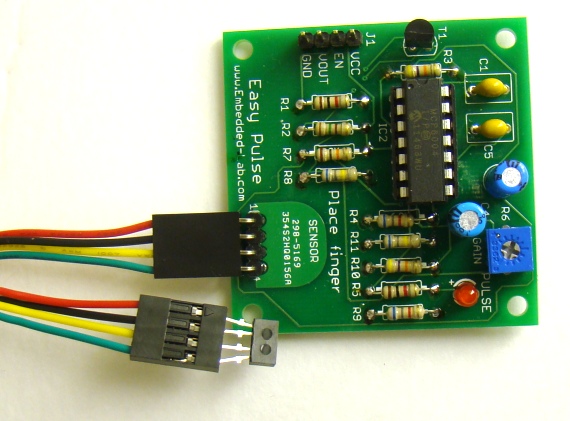
If you are using the jumper cable to connect the sensor to the board, make sure you connect the TCRT1000 pins correctly. Use the following picture as a reference while doing so.

Wiring TCRT1000 to board

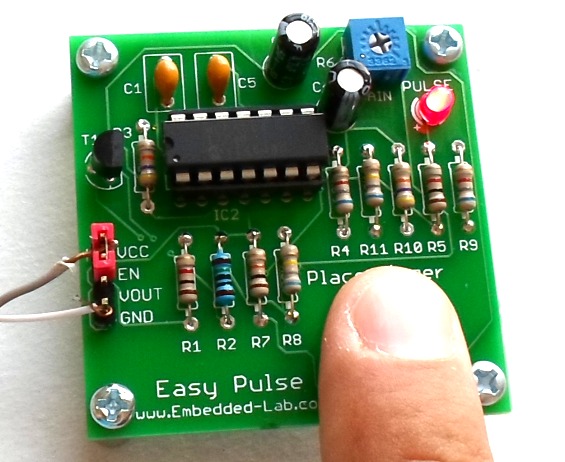
After finishing assembling the board, you can test the board by placing a fingertip gently over the sensor, and keep the finger still. Make sure that the potentiometer is set to somewhere around the middle position. If you don’t see LED pulsing, you can increase the gain by further moving the potentiometer position in clockwise direction. You have to wait for a few seconds until the circuit gets stabilized.

Introducing Easy Pulse: A DIY photoplethysmographic sensor for measuring heart rate

When I first built the Heart rate measurement through fingertip project, the infrared LED and photodiode used for finger photoplethysmography were actually from salvaged parts, and therefore, I could not provide specifications for them in the article. As a result of that it takes quite a bit of time to replicate that project with a different set of IR LED and photodiode as the values of the current limiting and biasing resistors may have to be changed for the new sensor to work properly. Today, I am going to talk about a revised version of the same project but with all the components specified this time. The new version uses the TCRT1000 reflective optical sensor for photoplethysmography. The use of TCRT100 simplifies the build process of the sensor part of the project as both the infrared light emitter diode and the detector are arranged side by side in a leaded package, thus blocking the surrounding ambient light, which could otherwise affect the sensor performance. I have also designed a printed circuit board for it, which carries both sensor and signal conditioning unit. I have named the board “Easy Pulse” and its output is a digital pulse which is synchronous with the heart beat. The output pulse can be fed to either an ADC channel or a digital input pin of a microcontroller for further processing and retrieving the heart rate in beats per minute (BPM).

Easy Pulse sensor

Read more

0-9999 seconds count down timer using PIC12F683 microcontroller

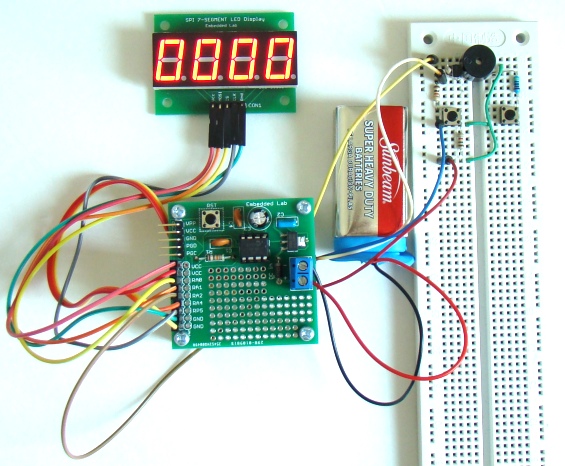
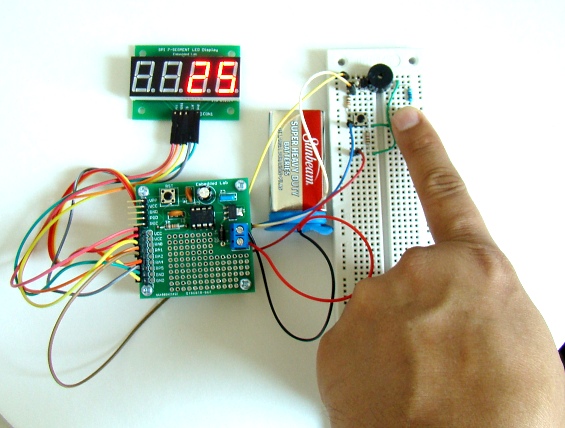
The goal of this project is to construct a simple 0-9999 seconds count down timer with an alarm and a display. The time is set through two tact switches and the count down seconds are displayed on a 4-digit seven segment LED display. The project uses PIC12F683 microcontroller for all I/O and timing operations and MAX7219 IC for driving the seven segment LED module. The time out condition is indicated by an audible alarm from a buzzer.

0-9999 seconds timer

Read more

« Older Entries Recent Entries »