Author Archives: R-B

EasyPIC Fusion v7: A single development board for dsPIC33, PIC24 and PIC32 architectures
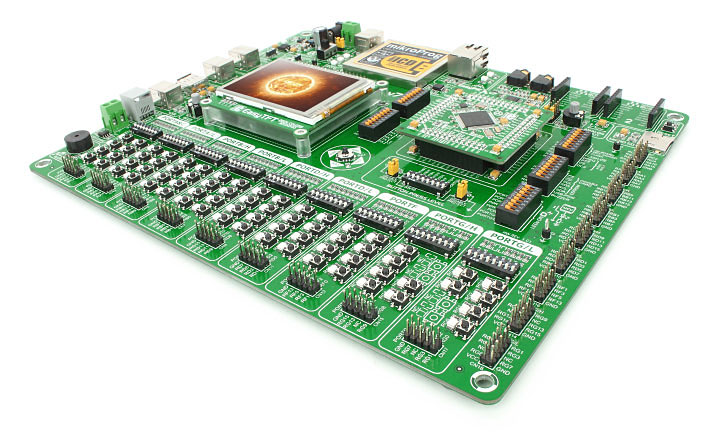
MikroElektronika has released EasyPIC Fusion™ v7 development board that supports three different Microchip processor families: dsPIC33, PIC24 and PIC32. The board is equipped with mikroProg, a fast USB 2.0 programmer and debugger. The board contains Ethernet, CAN, two USB-UARTs, USB host and device connectors, Piezo Buzzer, microSD card slot, stereo mp3 codec, sockets for temperature sensors, analog inputs and much more. Each microcontroller I/O pin is connected to 2 male headers, push button and LED, making it ready for all kinds of development.
Easy PIC Fusion v7 development board
chipKIT Tutorial 5: Pulse width modulation (PWM)

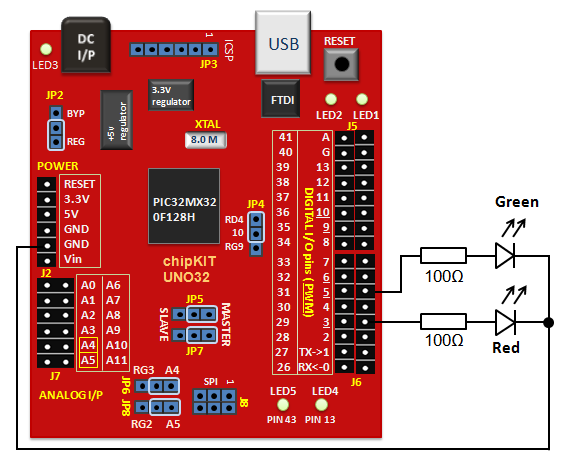
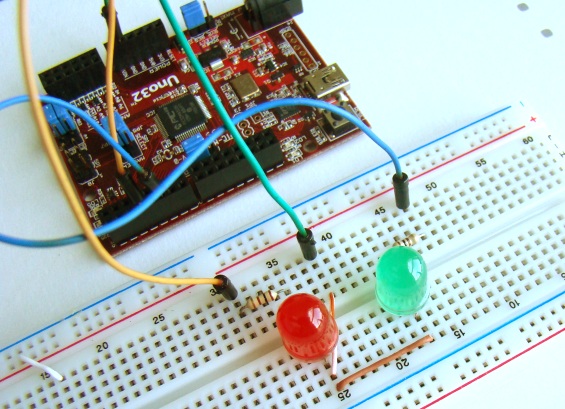
Pulse width modulation (PWM) is a technique of controlling the amount of power delivered to an electronic load using an on-off digital signal. The key idea behind this technique is that the average DC value of the digital signal, and hence the power delivered to the load, can be varied by varying the duty cycle of the signal. This method is commonly used for controlling speeds of DC motors and brightness of lamps. The switching mode power supplies are also based on the PWM technique. In this tutorial, we will discuss about the PWM pins of the chipKIT Uno32 board and illustrate the concept by controlling the brightness of two external LEDs.

PWM

Read more

Tilt sensing illustration with DE0-NANO FPGA board

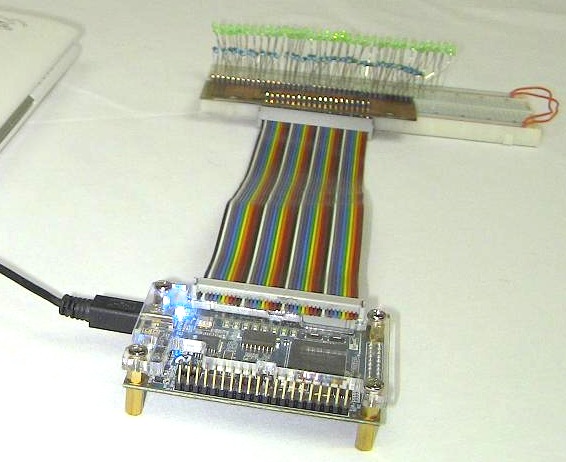
After building a 40 pin breakout board for the DE0-Nano Chris from PyroElectro wanted to test it out with something fun but not overly complex. So he decided to try something fun with an accelerometer available on the DE0-Nano board. In this tutorial, he shows how an accelerometer works, how it can be used to detect tilt and also how the tilt ‘value’ can be visually displayed on a large array of LEDs.

FPGA tilt sensing using DE0-Nano board


Breakout board for PIC16F1847 microcontroller

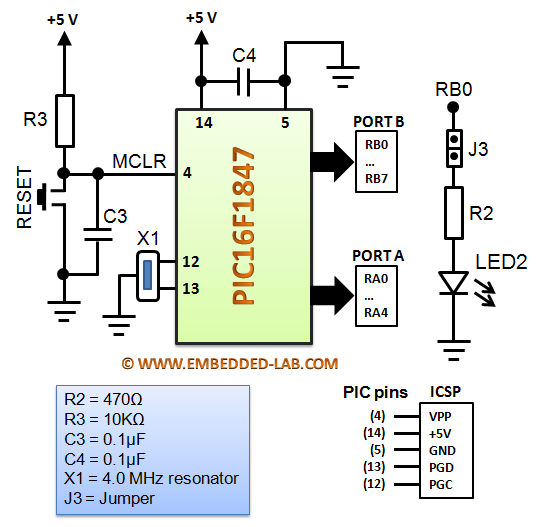
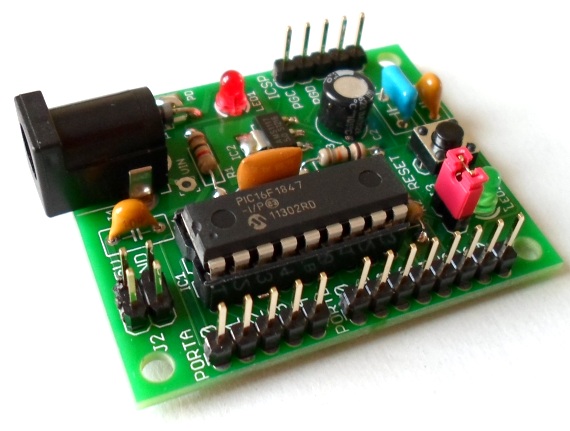
This is an improved version of my 18-pin PIC16F series breadboard module that I have used in many of my PIC tutorials and projects published in this website. The new version has got a +5V power supply regulator on-board and a 2.1mm female barrel jack for DC input from a wall adapter. The 18-pin PIC16F series microcontrollers are still very popular among hobbyists and beginners because of their compact size, low cost, and simplicity. The PIC16F1847 is the latest release in this series and is equipped with lot more peripherals and enhanced features than its predecessors. This breakout board will be helpful for rapid prototyping with the PIC16F1847 microcontroller. Since the predecessors of PIC16F1847 share the same pin configuration, this board can also be used with popular PIC16F84A, PIC16F628A, and PIC16F88 microcontrollers of the same series.

Breakout board for PIC16F628/88/1827/1847 microcontrollers

Read more

Breakout board for DE0-Nano FPGA development board

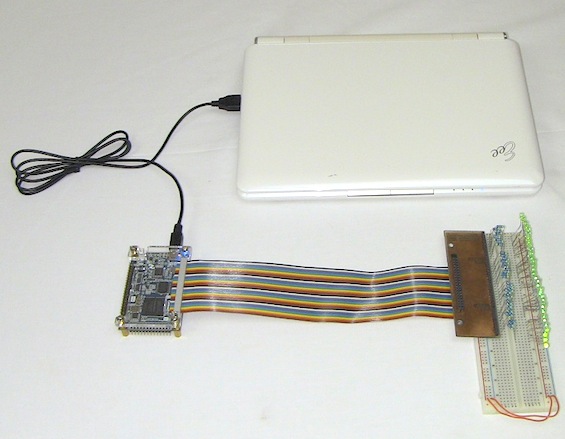
DE0-Nano is a great FPGA development and education board featuring the Altera Cyclone® IV 4C22 FPGA with 22,320 Logic elements (LEs), 594 Embedded memory (Kbits), 66 Embedded 18 x 18 multipliers, 4 General-purpose PLLs, and 153 Maximum FPGA I/O pins. Since not all of these I/O pins are used very often, Chris from PyroElectro has made his own expansion board for easy prototyping with DE0-Nano.

Breakout board for DE0-Nano

He designed a PCB for his breakout board that basically connects to the 2×20 pin headers on the DE0-Nano through an IDE cable and makes those I/O pins easily available for prototyping on breadboard.

« Older Entries Recent Entries »