Author Archives: R-B

Tutorial series on chipKIT programming and interfacing

chipKIT is an open source embedded development environment based on the popular Arduino platform. The major difference between the two platforms is the type of processor used in their hardware. The Arduino development boards are based on 8-bit Atmel microcontrollers which run at maximum clock speed of 16 MHz . On the other hand, the chipKIT hardware uses powerful 32-bit PIC processors running at 80 MHz clock, and thus provides improved performance over the traditional Arduino boards. I have started this new tutorial series on chipKIT, and I believe they will be helpful for beginners to start using this platform for their own embedded projects and designs. Because I am also new to the Arduino and chipKIT world, I would really appreciate your opinions, comments and suggestions regarding these tutorials.
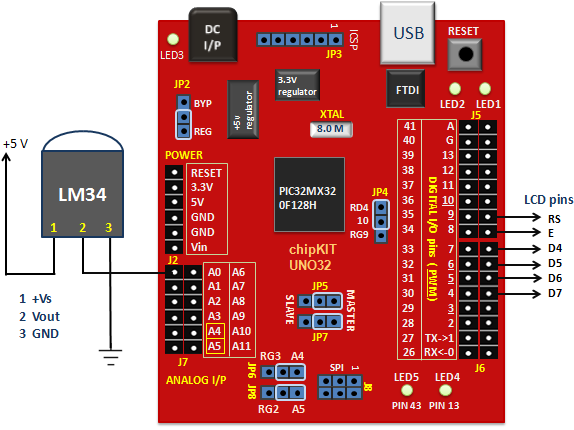
chipKIT programming and interfacing

Go to the main tutorial page
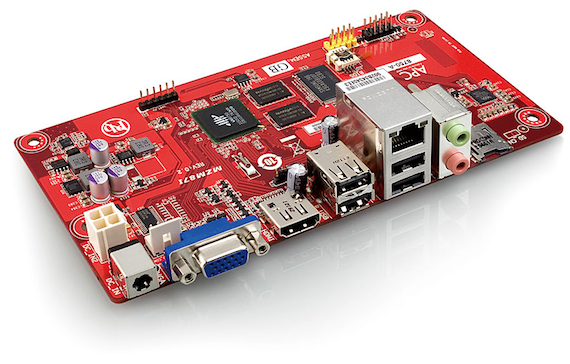
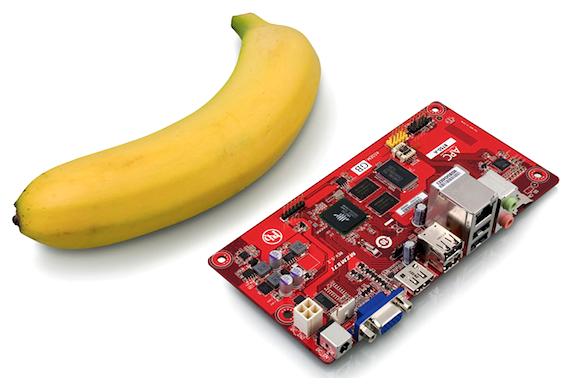
VIA technologies introduces the $49 Android PC system

Via Technologies on Tuesday unveiled the $49 APC Android PC system. Powered by a WonderMedia ARM processor that operates at 800MHz, APC integrates 512MB of DDR3 memory, 2GB NAND flash storage, and a full set of consumer I/O features in a small footprint Neo-ITX motherboard. The system also features a custom build of Android that has been optimized for keyboard and mouse input, and comes with a browser and a selection of preinstalled apps.

APC: $49 Android PC system

Read more

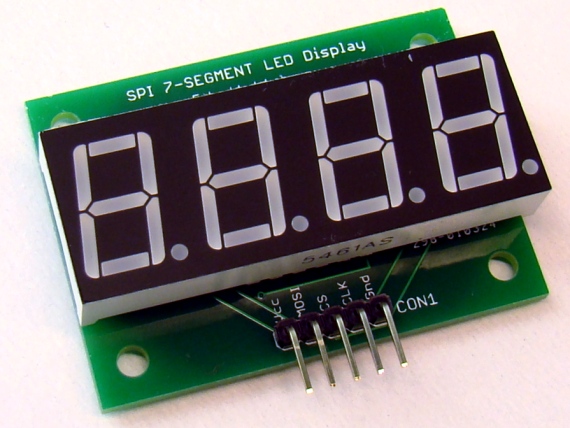
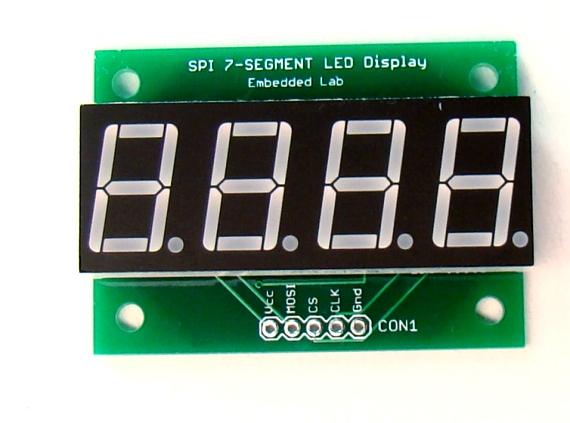
Serial four digit 7-segment LED display module

Seven segment LED displays are a very popular mean of displaying numerical information and finds application in front panel display boards of microwave ovens, washers and dryers, digital clocks, frequency counters, and many other gadgets. Compared to the LCD displays, the seven segment LED displays are brighter and provide a far viewing distance and a wide viewing angle. However, the downside is they are resource-hungry. It requires at least 12 I/O pins of a microcontroller to drive a standard 4-digit seven segment LED module. Consequently, their use with low pin-count microcontrollers (such as PIC12F series) is not practically feasible. Here’s a solution for that. The following 4-digit seven segment LED module features a serial interface that requires only 3 I/O pins of a microcontroller and provides full control of all digits and decimal points .

Four digit serial 7-segment LED display

Read more

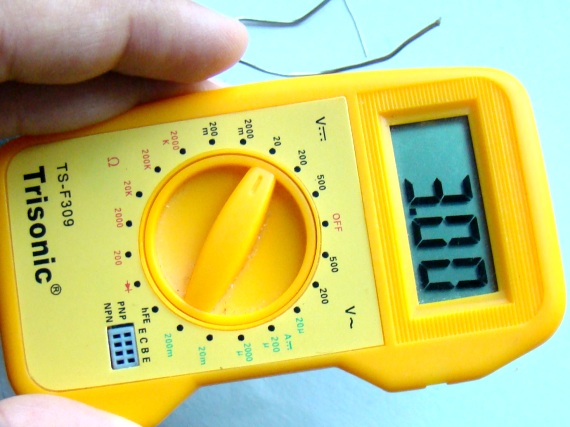
Add a thermometer to your digital multimeter

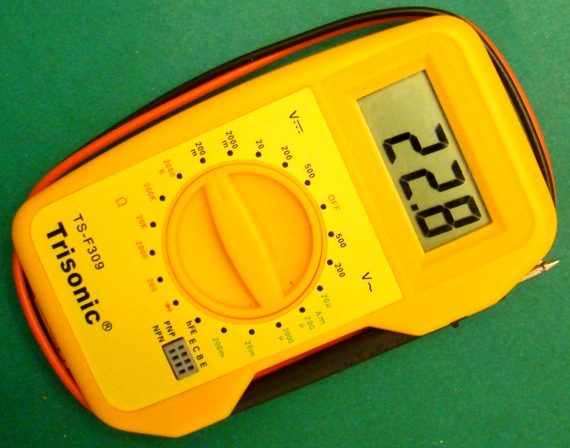
A digital multimeter is a very useful instrument that combines several measurement functions in one unit. A typical multimeter includes features of a variable-range ohmmeter, voltmeter, and ammeter. Some of them also include capabilities of testing diodes and transistors. In this article, I am going to talk about a technique of adding thermometer feature to a regular digital multimeter. The technique is very simple and uses one temperature sensor along with two resistors and a DPDT slide switch.

Multimeter showing the surrounding temperature in degree Celsius

Read more

Testing active analog temperature sensors with a multimeter

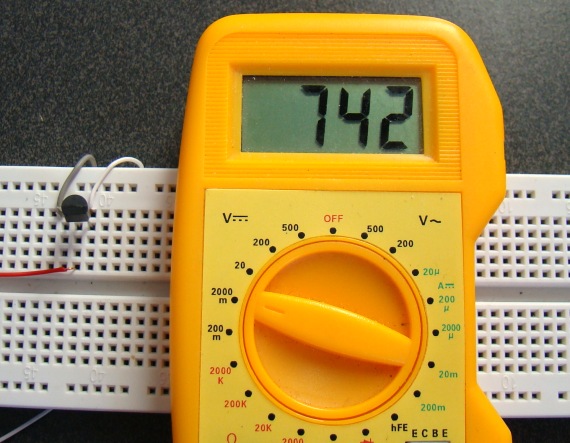
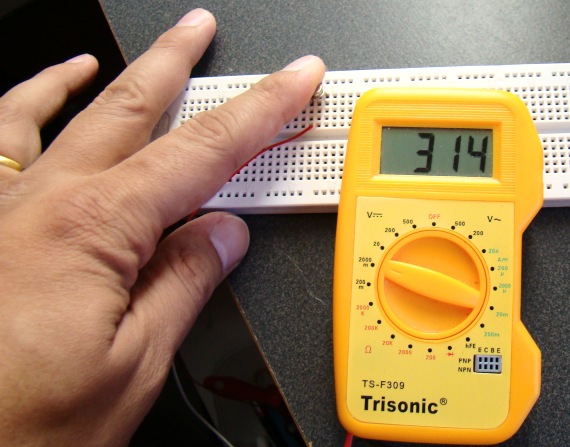
There are quite a variety of active analog temperature sensor ICs that provide an output voltage proportional to the temperature. They usually don’t require any external calibration and signal conditioning, and as such their output can be directly fed to the input of an ADC for digital processing. A few examples of such sensors are LM34, LM35, TMP35/36/37, and MCP9701. If you are having any trouble using any of these sensors in your project, here is a quick way to test if your sensor is working or not.

Testing analog temperature sensor ICs with a multimeter

Read more

« Older Entries Recent Entries »