Author Archives: R-B

Commandments for using PIC Microcontrollers

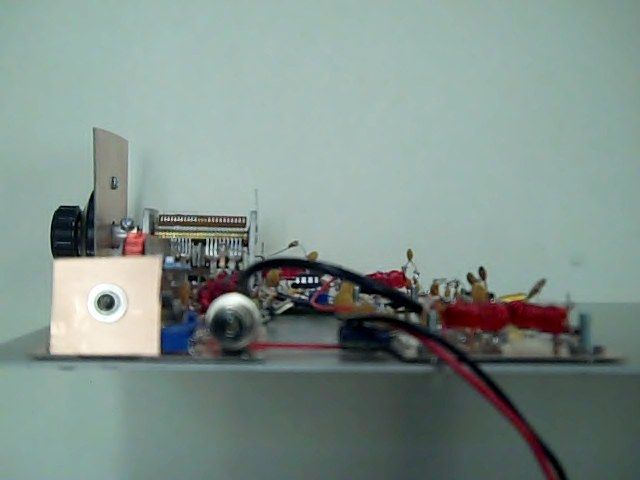
Based on his working experience with PIC microcontrollers, John Chandler has summarized some basic rules that could minimize the project development time and increase the reliability of PIC operation. Some of these rules (he said commandments) are related to power supply, clock and reset operation and hence they are applicable to all PIC circuits. Some PIC microcontrollers have multiple pins for Vcc and ground. He suggests to connect all of them not just one pair. A 0.1 uF bypass capacitor must be connected closest to the microcontroller. Similarly, the MCLR pin must not be floating, if it is enabled. Read more at digital DIY.
Read more

555 Contest Entry: “Whack a Mole” style game

Jim Chen made a very interesting LED chasing game that uses six 556 timer chips. This is his second entry to the 555 contest which is recently closed. There are nine LEDs in the game. Any of them could glow randomly. The player has to turn off the LED by touching an electrode next to the LED. While the player continue playing the game the time available for the player is less and less. When you missed to turn off an LED within the provided time frame, the game is over. Here’s how the game works. Read more

Radio frequency identification (RFID) with a microcontroller

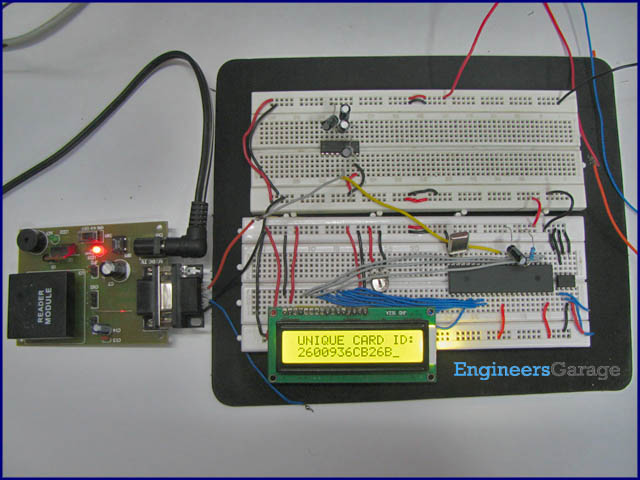
RFID is a technology that uses radio waves for transmitting the identity (unique serial number) of an object or a person. If you have an electronic key to access your office building, it probably uses the same technology. An RFID system has a reader and a transponder (also called tag). The reader transmits electromagnectic waves in its surrounding through an antenna system, and when a tag passes passes through the zone, it is activated and the reader can read the identification data stored inside the electronic tag. Read more

Theory of Matrix Keypad

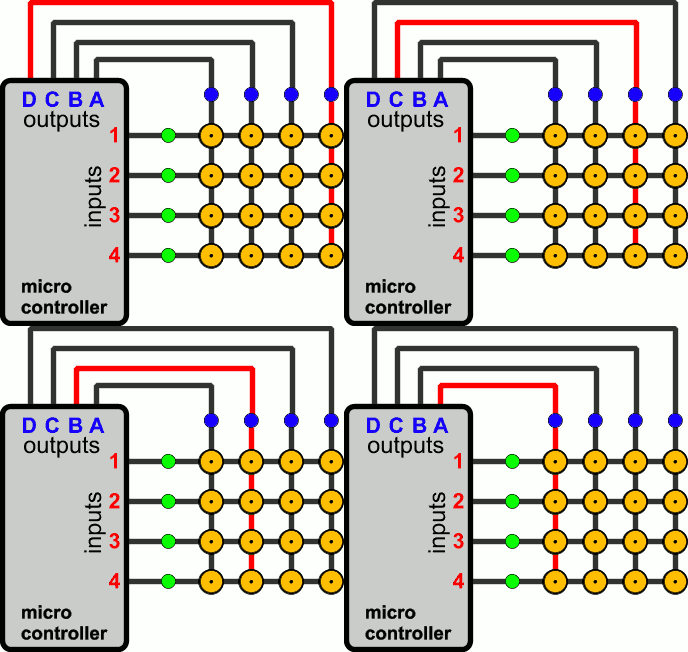
Tact switches are widely used as digital input devices. Normally one tact switch requires one digital I/P pin of a microcontroller but if you want to interface a matrix of such switches (say a 16 digit keypad), assigning a digital I/O pin for each key won’t be a good idea. You need to think about the way to minimize the required number of digital I/O pins of microcontroller. A very popular method is a keypad matrix where the keys are arranged into rows and columns so that a 4×4 (16) tact switches can be interfaced to a microcontroller using only 4+4 = 8 I/O pins. Read more

« Older Entries Recent Entries »