DIY lock-in amplifier using the AD630 balanced modulator

Lock-in amplifiers are used to detect and measure very small AC signals which are buried in an overwhelming noise. For example, consider a case where you want to single out a 5 mV sine wave from a white noise signal with 2 V amplitude. A lock-in amplifier makes this measurement possible. It uses a technique called phase-sensitive detection, which uses a specific frequency reference to extract the component of the signal at the reference frequency and phase. Noise signals, at frequencies other than the reference frequency, are then rejected and do not affect the measurement. This instructable describes how to construct

Read more

MikroElektronika celebrates 10 years of success in compiler development

MikroElektronika, a Belgrade, Serbia-based company, which is widely known for manufacturing a wide range of microcontroller development boards and compilers, is celebrating 10 years of success in compiler development this month. They developed their first compiler, which was mikroPascal for PIC,  in 2004, and since then they have released total 18 compilers: mikroC, mikroBasic and mikroPascal for PIC, dsPIC, PIC32, 8051, AVR and ARM. They are celebrating a decade of their achievement by offering entire month of special discount towards purchase of their BASIC, PASCAL, and C compilers. Throughout this month you can save up to $100 on the purchase of license for

Read more


MSP430 driven RGB LED ring clock

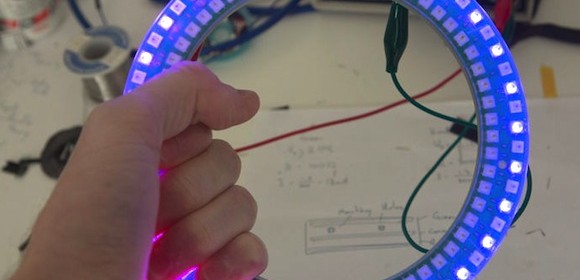
This MSP430G2553-based attractive wall clock is comprised of 2 rings of 60 WS2812 RGB LEDs. The PCB ring was constructed by daisy-chaining small and identical arched PCB segment. Visit this instructable for details on construction of the clock and downloading the firmware, which is written in C.

Read more
« Older Entries Recent Entries »