A simple solar-powered IoT weather station

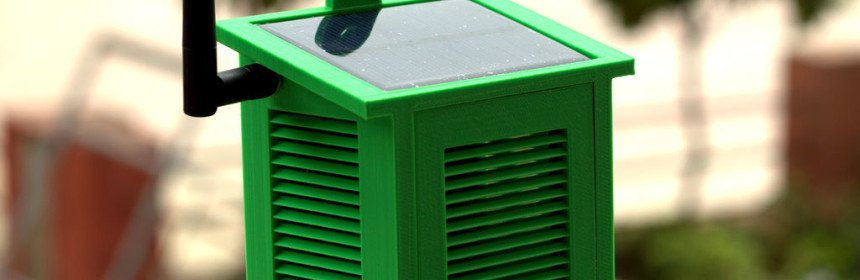
BME280 is a fully integrated environmental unit from Bosch that combines sensors for pressure, humidity, and temperature in a tiny 8-pin metal-lid LGA package of size 2.5 x 2.5 x 0.93 mm³. Because of its compact size, ease of use (BME280 supports standard I2C and SPI interfaces), and availability of supporting open-source Arduino libraries, BME280 is very popular among weather enthusiasts. We have seen its usage in our weather webserver project and standalone weather station tutorial before. This Instructable describes a similar weather station based on ESP8266 and BME280 and is solar-powered. The entire circuit is housed inside a 3-D printed enclosure.

Read more

ForEx: A compact desktop widget for foreign exchange rates display

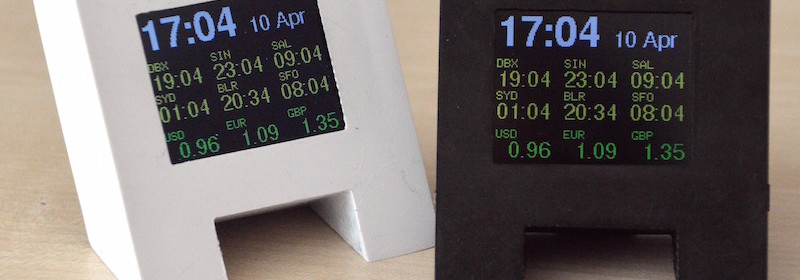
ForEx is a cute little desktop widget designed by Stefan for displaying major foreign exchange rates and the time of different locations using ESP8266. The time zone references are fetched a bit complicated but this method works and deliver accurate results. Further it allows using the effective name of the city which makes easier to use. In a first step the coordinates of the desired city are evaluated using the API of openweathermap.org. This works by sending the name of the city in a format like “Sydney,au” to the API which will response with its coordinates. In the second step the

Read more

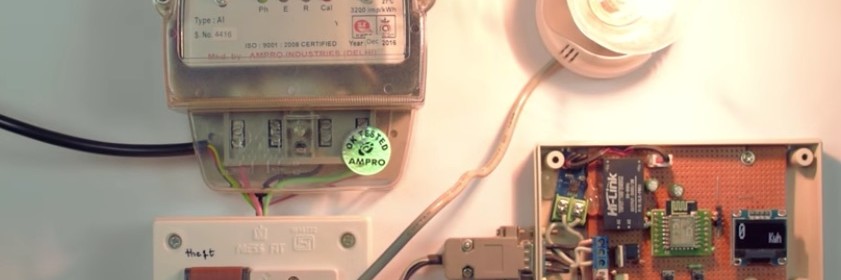
IoT Energy Meter

This cloud-connected energy meter works in conjunction with the regular household power meter to provide detailed information about the electricity usage at home. Modern power meters have a LED blinking every time a watt-hour is used, the IEM detects these flashes using a interrupt, counts them, then the data is stored to the cloud. Usually power companies provide very rough electricity usage data, the IEM provides data with a minute resolution. Knowing the household electricity usage allows to extrapolate statistics and can give precise numbers about the costs.

Read more
« Older Entries Recent Entries »