PocketBot: A matchbox size line following vehicle
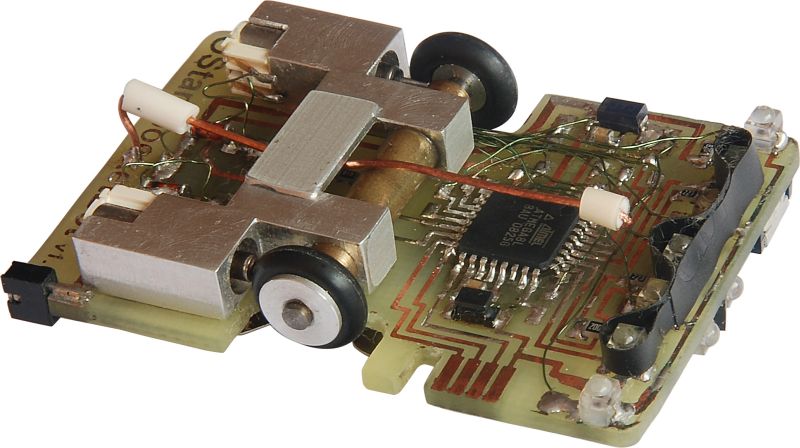
Ond?ej Stan?k, a student of Computer science at Charles University in Prague, the Czech Republic, won first prize in the freestyle category on the RobotChallenge competition in Vienna with this matchbox size line following robot (which he has named PocketBox). The robot is powered with two lithium-ion button batteries and is controlled by the Atmel ATmega8 microcontroller.

Read more
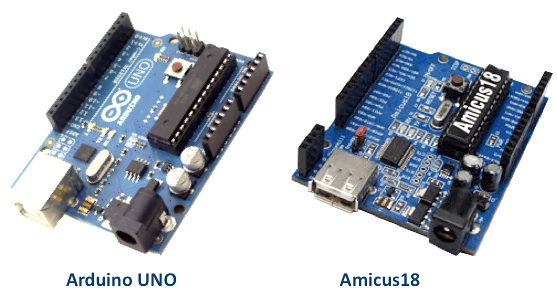
Amicus18: Arduino-style platform for PIC fans

Arduino needs no introduction; it is an easy-to-use yet powerful open source embedded system development platform that has gained huge amount of popularity in past few years, specially among hobbyists. The standard hardware consists of an 8-bit Atmel AVR processor with on-board headers providing access to its I/O pins. The processor is pre-programmed with a serial bootloader that simplifies the uploading of user programs to the on-chip flash memory without the need of any external programmer. Because of its low cost, user-friendly software development environment (open-source C/C++ like programming platform), rich set of libraries, and tons of resources available online,

Read more

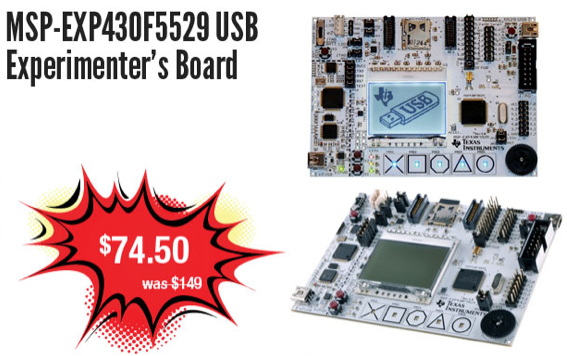
MSP-EXP430F5529 USB Experimenter’s Board for HALF price!

TIDeals is offering 50% discount on MSP-EXP430F5529 USB Experimenter’s Board (Normally, it’s $149, and $74.50 after discount), and that includes free international shipping too. From MSP-EXP430F5529 Experimenter Board User’s Guide, “The MSP-EXP430F5529 Experimenter Board is a development platform based on the MSP430F5529 with integrated USB. The Experimenter Board showcases the abilities of the latest family of MSP430s and is perfect for learning and developing USB-based applications using the MSP430. The features include a 102×64 dot-matrix LCD, microSD memory card interface, 3-axis accelerometer, five capacitive-touch pads, RF EVM expansion headers, nine LEDs, an analog thumb-wheel, easy access to spare F5529 pins,

Read more

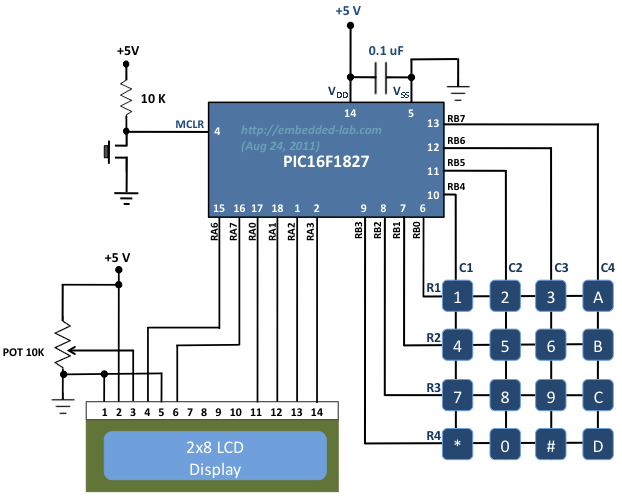
Lab 18: Matrix keypad interfacing

Matrix keypads are very common input devices in embedded systems. They have simple architecture and are easy to interface. One good thing about them is that they allow you to interface a large number of input keys to a microcontroller with minimum usage of  I/O resources. This tutorial describes two different approaches of reading input data from a 4×4 (16 keys) matrix keypad interfaced to a PIC microcontroller. The pressed key information is displayed on a character LCD. The microcontroller used in this experiment is PIC16F1827.

Read more
« Older Entries Recent Entries »