Upcycling a vintage film camera with Raspberry Pi
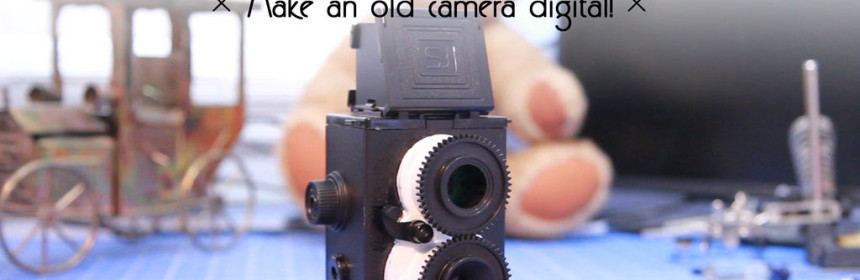
Gone are the days of vintage film cameras. If you still have one such camera lying around, you might want to consider upcycling it to a digital camera as a weekend fun project following this instrcutable. The author shows how to convert a 35mm twin-reflex film camera to digital using a Raspberry Pi zero with a camera module connected, a 1.8″ TFT LCD, and a rechargeable USB power bank. The camera also implement a push button for snapping pictures. The hardware setup for this project is simple. The TFT LCD data and control pins directly connect to the I/O pins of the

Read more

Laser Sky Effect using Arduino

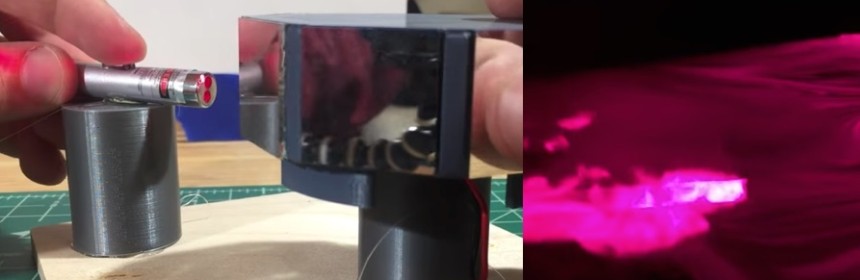
Bouncing a laser beam off a spinning mirror can create an amazing light show as illustrated in this Laser Sky video by Youtube channel Normal Universe. The spinning mirror sweeps out a laser plane, which illuminates the cross sections of smoke or fog in the room and let you visualize how the air medium is moving around you in a very cool way. The spinning mirror is built out of 8 pcs of tiny plane mirrors installed on an spinning motor assembly made of a PC fan and a 3D printed mount part. The Arduino Uno is used as the main brain in

Read more

A DIY mono class D amplifier

The PAM8610 is a 10W stereo Class-D audio amplifier chip available in a 40pin QFN 6mm*6mm package. The PAM8610 runs off a 7V to 15V supply at much higher efficiency than competitors’ ICs and requires a very few external components for operation. You can buy a PAM8610 amplifier breakout board for less than $2 on eBay and Aliexpress. This Instructables described how to use one of those amplifier modules along with a pack of rechargeable lithium battery to drive a 4″ speaker delivering ~15W of output power. The instructable describes also describes how to connect a charging circuitry for the lithium

Read more

Making an Ultrasonic Anemometer

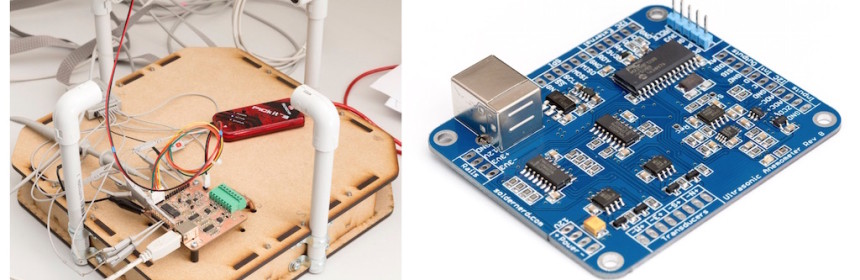
An anemometer is a common instrument at a weather station. It is used to measure the wind speed and wind direction. The most common type of anemometer uses mechanical sensors consisting of three or four hemispherical cups mounted on horizontal arms on a vertical rod. As the wind blows, the cups are pushed causing the arms to rotate at a rate proportional to the wind speed. In addition, a wind vane connected to the anemometer can give the direction measurements. While the cup and vane anemometers are very popular due to their very simple design, they can be susceptible under cold and humid conditions

Read more

Making a simple weather web server using ESP8266 and BME280

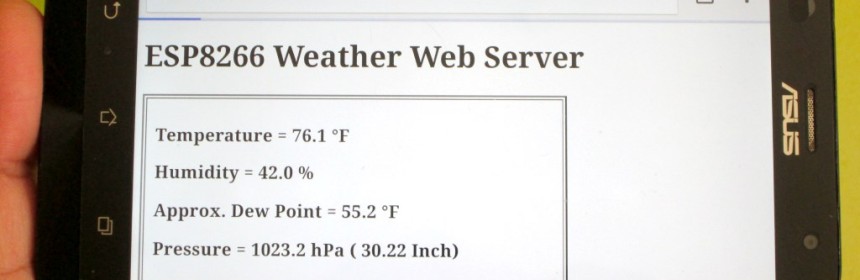
Since its launch in 2014, ESP8266 has revolutionized the IoT space by offering an extremely cost-effective and programmable WiFi-enabled microcontroller to hobbyists and professionals, thereby opening the doors to all kinds of everyday objects and sensors to the internet. In addition, with it’s built-in WiFi capability, the ESP8266 can also serve as a standalone web server on a local network, and can respond to the http GET commands received from an internet browser. This project illustrates how to construct a simple standalone weather web server utilizing NodeMCU development board for ESP8266 and Bosch’s BME280 environmental sensor chip. On receiving the web requests, the ESP8266

Read more
« Older Entries Recent Entries »