USB media volume control
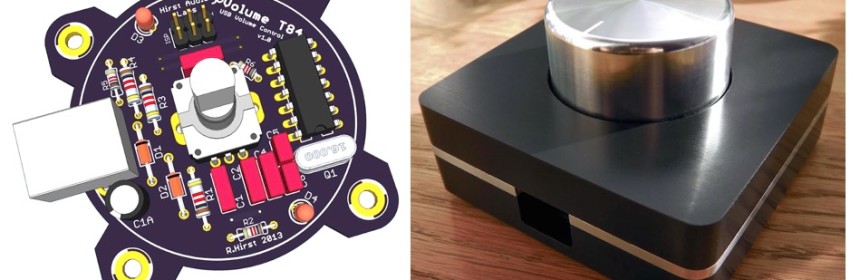
This simple ATTiny 2313-based USB media controller design from Rupert Hirst lets you add an external volume and mute control to your PC. It uses V-USB, a software implementation of a USB 1.1 compliant for lower end AVR microcontrollers that do not natively support USB. I chose to go with the Zener 3V6 (3.6volts) diode approach to keep the Micro power rails at 5volts as I have in most of my experiments.The specification of the 3V6 type Zener is very important to the design, the total power consumption of the part must be no more than 500mw (0.5w)! due to extra capacitance on the USB -DATA and +DATA

Read more
Making your own action camera

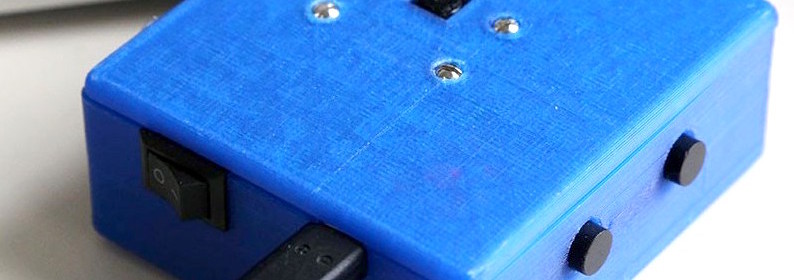
Action cameras are great for capturing your favorite sport activities. Connor Yamada‘s describes how to build a DIY action camera using Raspberry Pi A+ computer and a Pi camera board. This camera can take both still and movie shots and is bluetooth and wifi enabled that allows wireless file transfers between the camera and a host computer. Connor also designed a 3D-printed enclosure for the camera that houses everything including a 2000mAh capacity rechargeable battery. In order to reduce the form factor his action camera, Connor had to remove the USB jack from one USB port on the Pi board with some side cutters and solder a ribbon cable to the

Read more

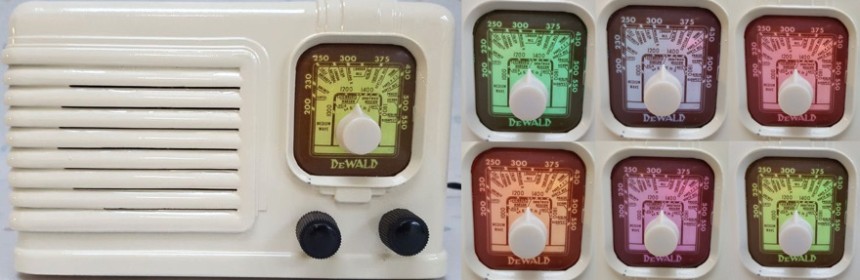
Retro table radio breathes new life with a Pi zero and becomes talkative

A late 1940s DeWald table radio is given a new life by the Instructable user MisterM using a Raspberry Pi Zero, some RGB LEDs, and a pair of PC Speakers. The radio can read out notifications from various internet-connected services using Pyvona, a Python wrapper for Amazon’s IVONA text-to-speech engine along with IF This Then That (IFTTT) integration. The RGB LEDs light the radio’s dial with a different color depending on the keywords detected (Red for the word ‘YouTube’, Orange for ‘Sunset’, etc ) in the notification text. Sorting out the audio was little bit challenging because the Pi Zero does not have a

Read more

Wireless capsule camera

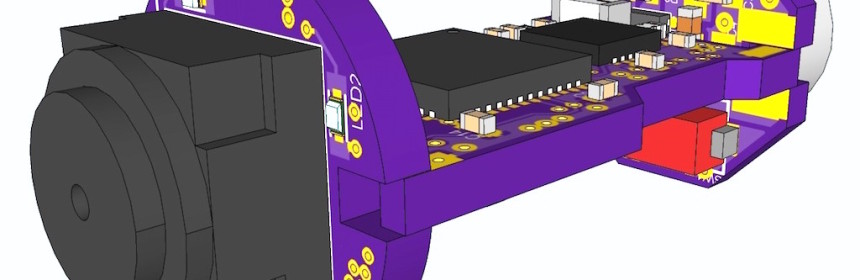
Capsule endoscopy lets doctors to see inside of your small intestine, an area that isn’t easily reachable with traditional endoscopy procedures. It involves a tiny wireless capsule camera that the patient needs to swallow. The camera has its own light source and takes pictures of the small intestine as it passes through. The pictures are transmitted wirelessly to a small recording device next to the patient. Such cameras are very costly and built with the technologies that are proprietary and inaccessible to makers. Ryan Bailey has undertaken to make an open capsule camera usable for medical applications as well as adaptable to

Read more

PC stats on a tiny OLED

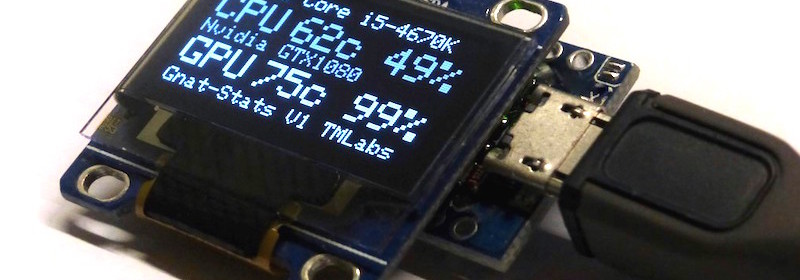
Rupert Hirst bought a new Nvidia GTX1080 graphics card, and in order to monitor its performance, he built an external PC stat display using an Arduino Pro Micro and a 128×64 pixel I2C OLED display. Note that unlike in Arduino Uno, the I2C pins on the Pro Micro are available at the D2(SDA) and D3(SCL) I/O pins. In order to minimize the footprint of his project, he directly hooked the 4 pins (VCC, GND, SCL, and SDA) of the OLED display to the 4 I/O pins in a single row (D5, D4, D3, and D2) of the Pro Micro to minimize

Read more
« Older Entries Recent Entries »