PIC24-based game console
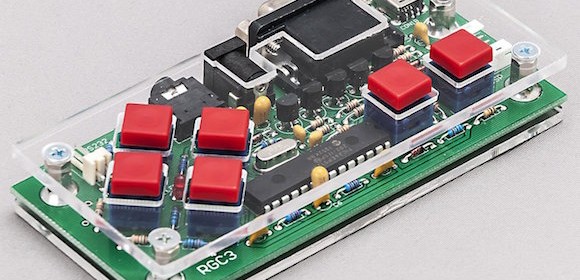
Voja antonic‘s single chip game console is based on PIC24EP512GP202 microcontroller, a 16-bit Microchip’s MCU which is programmed to generate the VGA signal, music and sound effects for playing Jumping Jack. As the video signal and the corresponding sync signals are generated by software, the console contains a minimum of hardware. There is also an audio signal output with five binary tone channels, mixed by a passive resistor network. Two of those channels are used for sound effects, similar to ones used in video games of that time (early eighties) and three for background music. This output is capable of driving line

Read more
LimiFrog- A STM32-L4 based wearable device with bluetooth and sensors

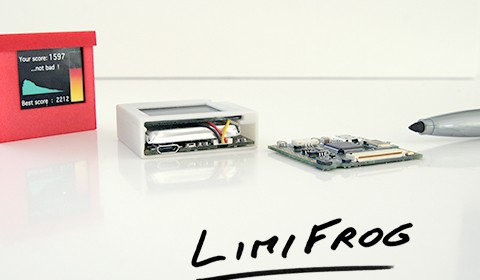
Xavier Cauchy introduces LimiFrog– an ultra-compact, Bluetooth-enabled, and multiple sensor-packed development board based on the powerful STM32-L4 microcontroller. The board weighs less than 25 grams and features a 160×128 color OLED display, 8MB data flash, 500 mAH LiPo battery, USB connectivity, and lots of sensors, which include temperature, pressure, light, sound, accelerometer, gyroscope, and magnetometer.

Read more

Arduino Mini weather station

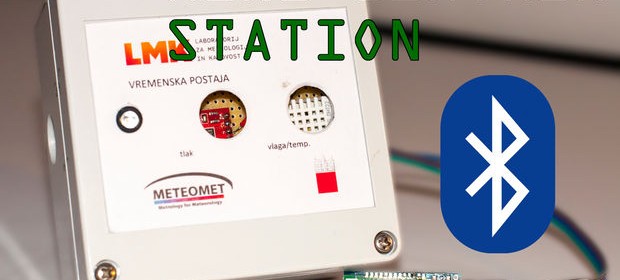
Matej Blagšič posted instructions for building a Bluetooth-enabled Arduino-based mini weather station that can measure ambient temperature, pressure and humidity. The main question is why did I/we choose the Seeeduino V4. If we were going for a cheap Chinese alternative, we could have gone with Funduinos or anything like that, as the Seeeduino is only a few bucks cheaper. The answer is the features. I see it as an upgrade to the Arduino Uno. It has all the features labeled with arrows. Some are subtle like the micro USB port, as many of us have smart phones that uses the

Read more

DIY USB power meter stick

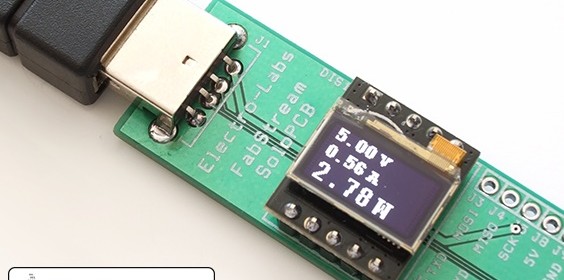
Electro-Labs has posted a new project about making a DIY USB power meter based on Atmega328 processor. It sits between the USB port of the computer and the USB device to be connected to monitor the USB output supply voltage and the current drawn by the USB load device. The computed power consumption is displayed on a small OLED on the board. The USB meter stick itself gets powered from the USB port. The board is built around an Atmel ATMEGA328 microcontroller. To make the circuit as small as possible, the MCU is used in minimal configuration. Internal 8MHz oscillator is

Read more
« Older Entries Recent Entries »