Alarm clock with a car horn
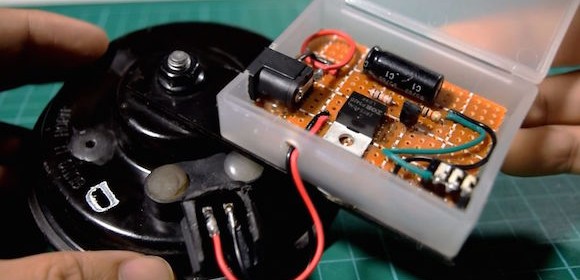
Do you think your alarm clock is not loud enough to wake you up in the morning? This one would definitely work for you (and probably wake your neighbors too): an alarm clock with a car horn.
Read more|
|
Do you think your alarm clock is not loud enough to wake you up in the morning? This one would definitely work for you (and probably wake your neighbors too): an alarm clock with a car horn.
Read more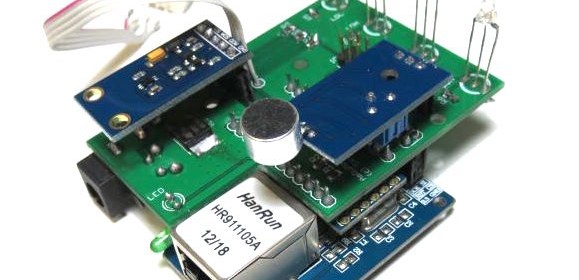
Davide Gironi‘s ambient quality monitor uses Arduino and a bunch of sensors to monitor four indoor environmental parameters, namely temperature, humidity, noise and illumination. The measurements are recorded on to the xively.com platform, as well as displayed locally to the user through 4 bi-color led indicators.
Read more
Antenna analyzers are a common tool used for troubleshooting antennas and fine tuning them for optimal performance. They might cost anywhere from a couple hundreds dollars to thousands based on quality, features, and frequency range of operation. For a low frequency application (< 30MHz), this Arduino-based DIY Antenna Analyzer can be build under $40. The key component of this design is the AD9850 DDS module that can be bought on eBay for less than $5. The following video shows the demo of this project. via [Hackaday]
Read more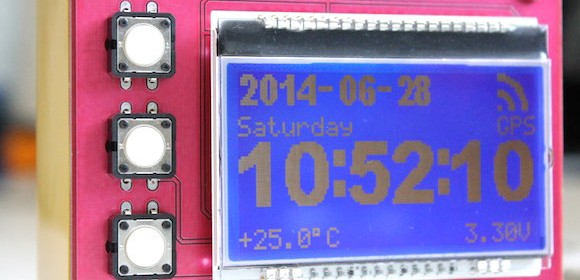
This PIC18F25K20-based clock uses radio receivers to synchronize the time with that from the GPS satellites or the DCF77 transmitter, both of which are referenced to atomic clocks. This project is a clock with radio receivers which can receive the exact date and time from the DCF77 time signal transmitter or the UTC from the GPS satellites and display it on a 128×64 pixel graphic display. DCF77 transmitter and GPS is synchronized to an atomic clock. So basically this project can “connect to” an atomic clock. This project is an open design: open hardware and open source software.
Read more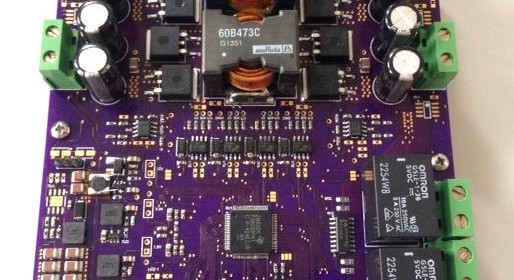
Nathaniel VerLee’s Solar Power System Controller supports solar panels in series or parallel combinations to deliver up to 500W output, that can be used to power street lights, weather stations, sail boats, security systems, and many more applications. The solar energy generator has a buck boost topology DC-DC converter that can either step up or step down the output voltage from the input voltage, which allows the system to operate at the panels peak efficiency known as the maximum power point. The maximum power point is tracked using a current and voltage sensor by periodically changing the input to output
Read more|
|
|