Author Archives: R-B

Easy Pulse Sensor (Version 1.1) Overview (Part 1)
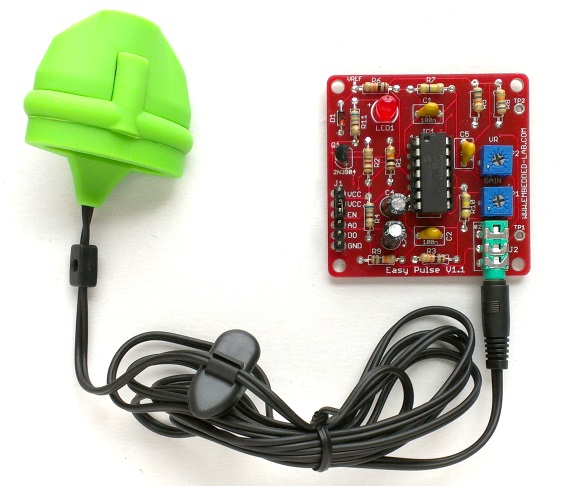
The Easy Pulse sensor is designed for hobby and educational applications to illustrate the principle of photoplethysmography (PPG) as a non-invasive optical technique for detecting cardio-vascular pulse wave from a fingertip. It uses an infrared light source to illuminate the finger on one side, and a photodetector placed on the other side measures the small variations in the transmitted light intensity. The variations in the photodetector signal are related to changes in blood volume inside the tissue. The signal is filtered and amplified to obtain a nice and clean PPG waveform, which is synchronous with the heart beat. The original version of Easy Pulse uses the TCRT1000 reflective optical sensor to sense the blood variation in the finger tissue and outputs a digital pulse which is synchronous with the heart beat. Today, we are pleased to announce the release of Easy Pulse Version 1.1, which has some improvements over the original design. The new version provides both analog PPG waveform as well as digital pulse signal as separate outputs. Easy Pulse Version 1.1 board is available for purchase on Tindie. Recently, our Chinese distributor Elecrow has also started selling it for $18.50, and they can ship it world-wide at lower cost.
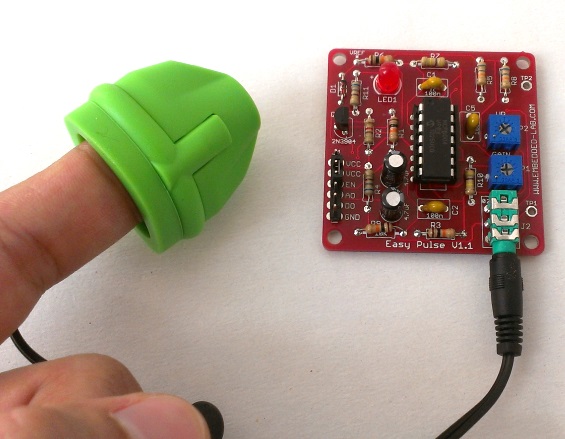
Easy Pulse version 1.1
Read more

MAX7219-based double row 4-digit seven segment LED display

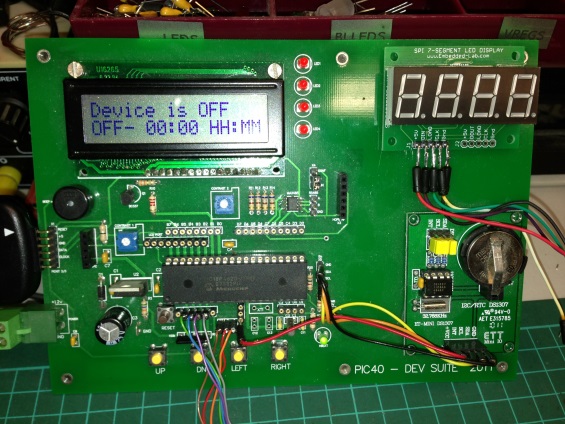
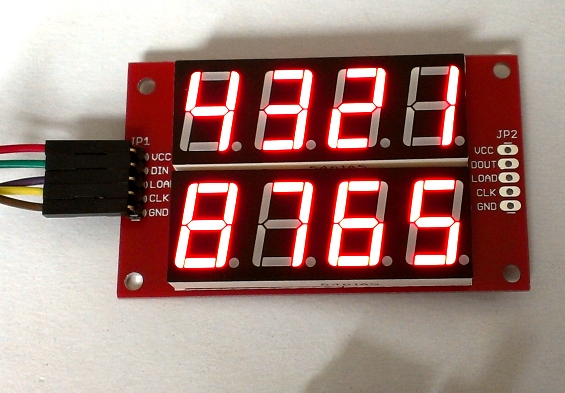
This display board (SPI7SEGDISP8.56-2R) features eight 7-segment displays arranged in two rows of four digits. The on-board MAX7219 driver enables you to control all LED segments through only 3 I/O pins of microcontroller. The major advantage of using this board is the time-division multiplexing operations required for continuous refreshing of the display digits are performed by the MAX7219 chip, thereby keeping the microcontroller free for doing other pressing tasks. The double row arrangement is suitable for many projects where two variable values are to be displayed simultaneously, such as displaying temperature and humidity, or current and voltage, etc.

SPI7SEGDISP8.56-2R: MAX719-based seven segment LED display module

Read more

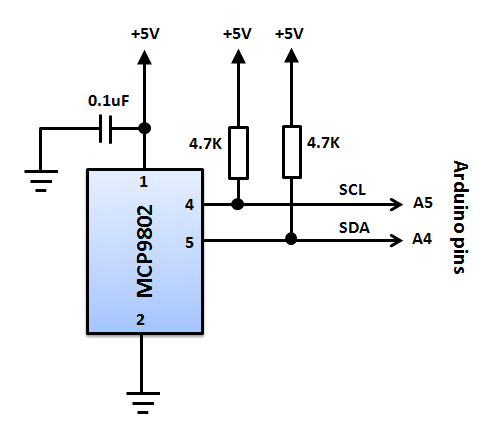
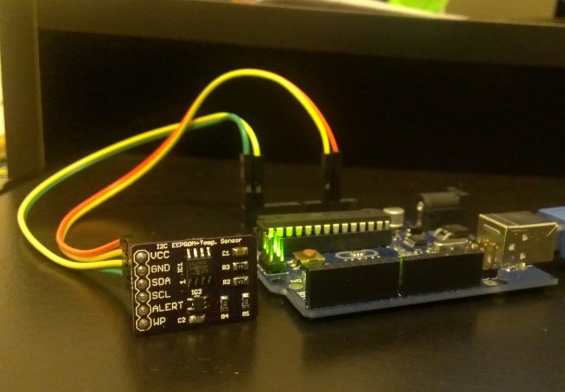
MCP9802 temperature sensor and Arduino

MCP9802 is a digital temperature sensor from Microchip that measures temperatures between -55°C and +125°C to a digital word. It provides an accuracy of ±1°C (maximum) from -10°C to +85°C. The MCP9802 sensor comes with user-programmable registers that provide flexibility for temperature sensing applications. The register settings also allow user-selectable 9-bit to 12-bit temperature measurement resolution. This sensor has an industry standard 2-wire I2C compatible serial interface, allowing up to eight devices to be controlled in a single serial bus. In this blog post I am going to write about an Arduino sketch to interface the MCP9802 sensor with an Arduino for temperature sensing application. For illustration, I am using the MCP9802 sensor onboard the I2C EEPROM+Sensor breakout board.

Arduino and MCP9802


Read more

Easy Pulse board used as biofeedback for virtual jogging

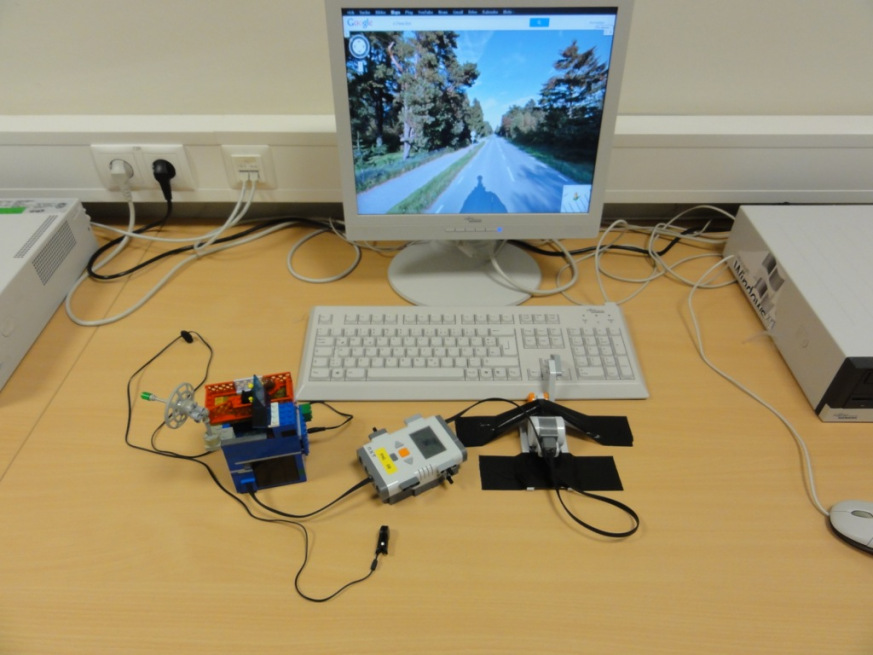
Sergej Stoetzer and two of his students just finished their virtual jogging project, where the Easy Pulse board has been used to provide a biofeedback to their system. They interfaced an ear-clip sensor to the Easy Pulse board to detect the heart beat during virtual jogging. The output of the Easy Pulse board goes to a Lego Mindstorms NXT-Brick, which in turn hits the Arrow Up key on a keyboard connected to PC. On the PC, a Google Street view is opened which moves forward every time the Arrow Up key is hit. So, the idea is to give you a virtual scenic run while jogging on a treadmill. The Easy Pulse detects the heart beat and the Lego Mindstorms NXT hits the Arrow Up key after every 4th pulse. More you jog, faster would be your pulse rate, and the scene changes on the PC screen accordingly.

Virtual jogging project

It was a very interesting project. Thanks to Sergej for informing us about this.

Link to project

« Older Entries Recent Entries »