Author Archives: R-B

I2C EEPROM plus Temperature Sensor breakout board
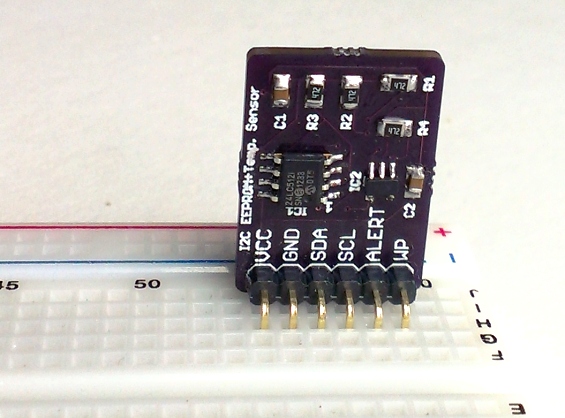
This tiny breakout board carries Microchip’s 24LC512 EEPROM and MCP9802 temperature sensor devices, both of which support I2C protocol. This board can be used for both sensing the ambient temperature and storing it. The MCP9802 is a digital temperature sensor with an user-selectable resolution from 9 to 12 bit. It can measure temperature ranging from -55°C to +125°C and notifies the host microcontroller when the ambient temperature exceeds a user programmed set point through its ALERT output pin. This board allows you to store up to 32000 temperature samples when you use the sensor in high resolution mode (12-bit, 0.0625°C) with each sample stored as two bytes.
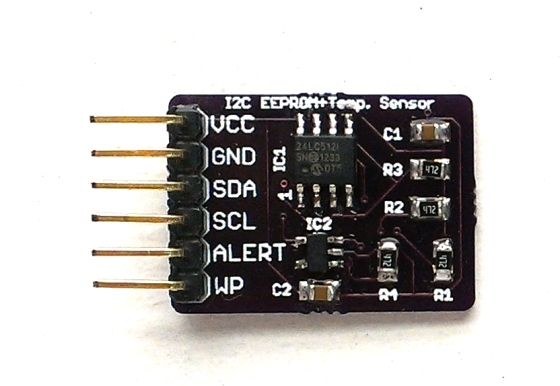
I2C EEPROM and Temperature sensor board
Read more

New version of MAX7219 based 4-digit serial seven segment LED display

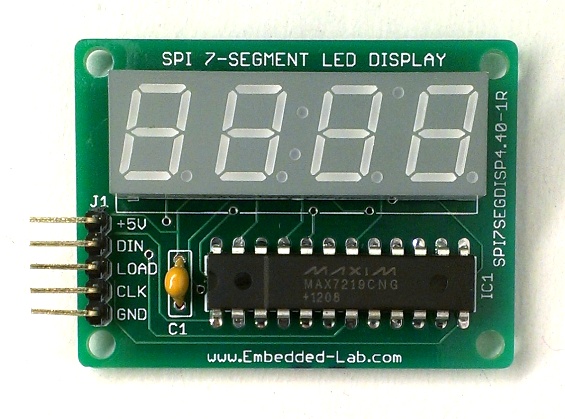
This (SPI7SEGDISP4.40-1R) is a revised version of the previous SPI seven segment LED display (4 digit) board that displayed numerals and decimal points. The new version has a better quality seven segment LED display (LTC-4727JS) with three extra LED segments, as shown below. The additional colon segments are useful in projects where you need to display time (HH:MM or MM:SS).

Newer version of 4-digit SPI seven segment LED display

Read more

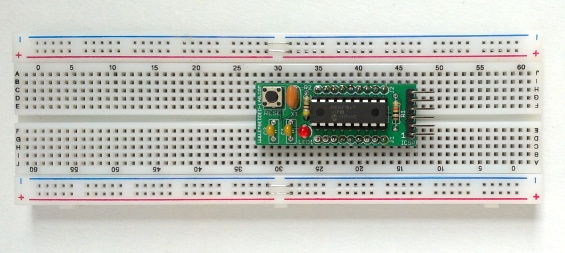
Mini breakout board for 18-pin PIC16F series microcontrollers

This mini breakout board is designed to simplify prototyping and experimentation work with the popular 18-pin PIC16F series microcontrollers. It is small in size (1.95″ X 0.75″) and is breadboard friendly.

Mini breakout board for 18-pin PIC16F series microcontrollers

It supports PIC16F84A, PIC16F628A, PIC16F88, PIC16F648A, PIC16F1827, PIC16F1847, and other 18-pin microcontrollers in the same series. Read more

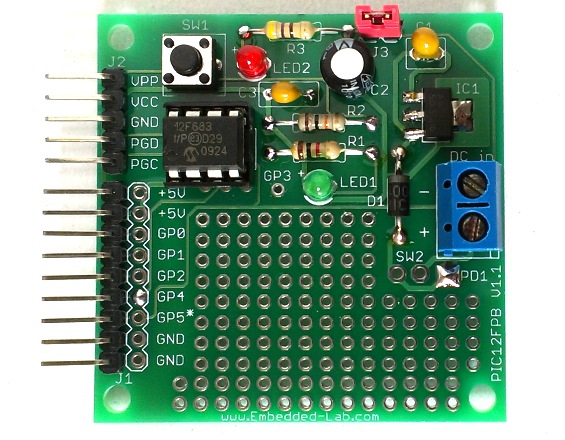
Revised version of the PIC12F microcontrollers breakout board

The 12F series of PIC microcontrollers are handy little 8-pin devices designed for small embedded applications that do not require too many I/O resources, and where small size is advantageous. These applications include a wide range of everyday products such as hair dryers, electric toothbrushes, rice cookers, vacuum cleaners, coffee makers, and blenders. Despite their small size, the PIC12F series microcontrollers offer interesting features including wide operating voltage, internal programmable oscillator, 4 channels of 10-bit ADC, on-board EEPROM memory, on-chip voltage reference, multiple communication peripherals (UART, SPI, and I2C), PWM, and more. This is a revised version of the previous PIC12F development board and is designed for fast and easy development of standalone applications using PIC12F microcontrollers. It features an on-board regulated +5V power supply, header connectors to access I/O pins, an ICSP header for programming, a reset circuit, and a small prototyping area for placing additional components.

PIC12F microcontroller mini development board

Read more

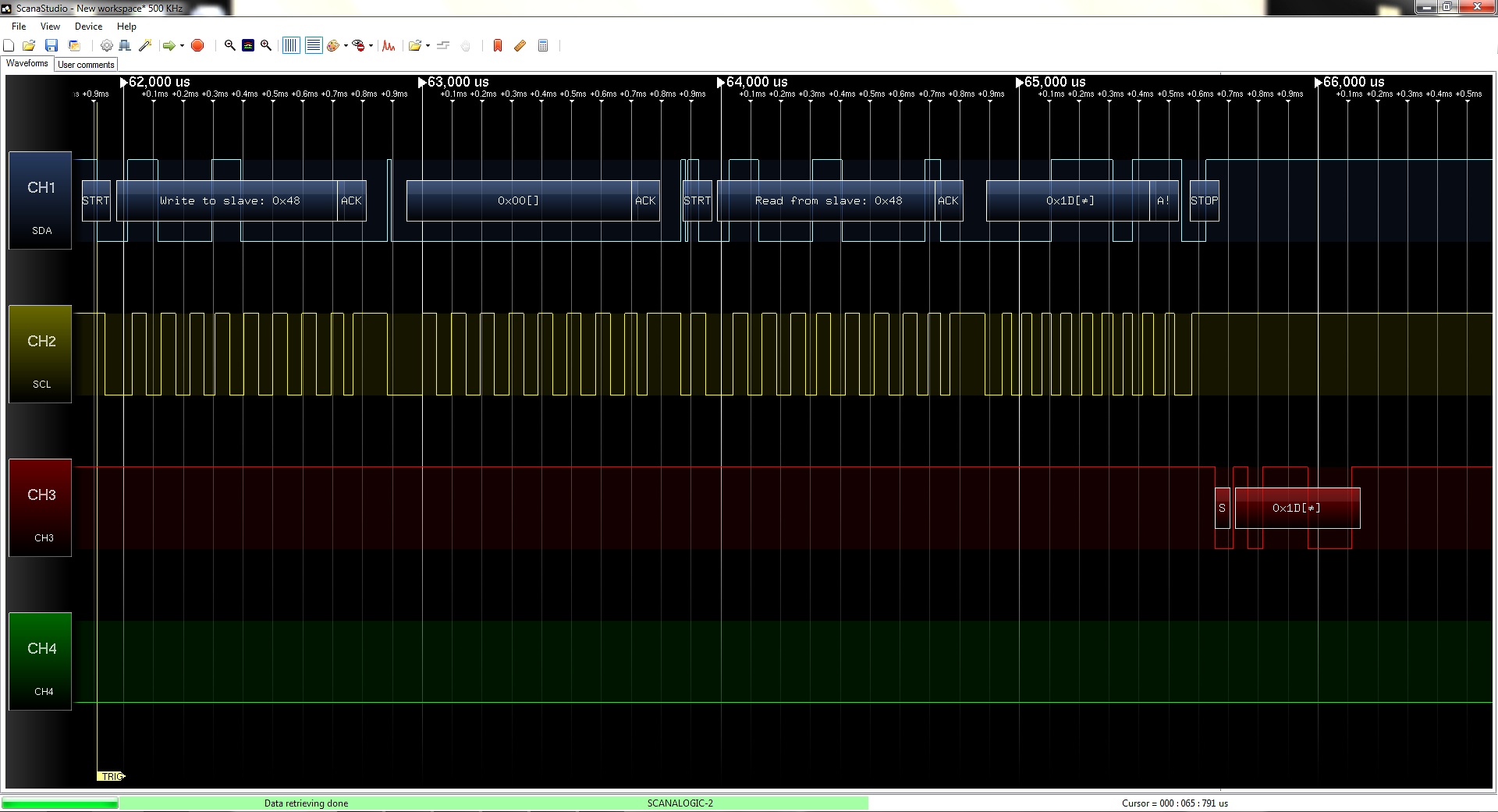
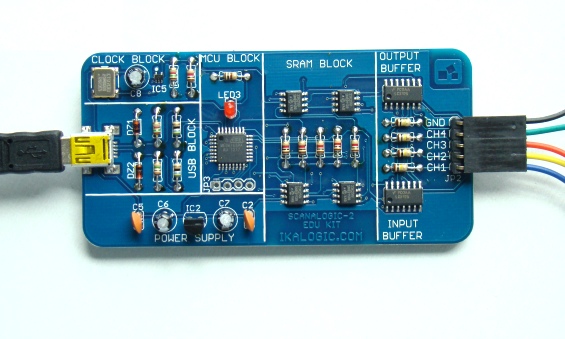
Understanding Logic Analyzer basics using SCANALOGIC-2 EDU KIT

A logic analyzer is an excellent tool for capturing many digital signals at once and displaying their timing relationships. It is particularly useful in verifying and debugging digital circuits. This tutorial is intended to provide a quick overview of a logic analyzer tool and its uses in analyzing and decoding data flowing on multiple signal lines or bus in a digital system. The logic analyzer tool is extremely helpful in troubleshooting problems arising from timing violations and transients on buses. In this article, I am going to use the SCANALOGIC-2 educational kit from IKALOGIC to illustrate very basic features of a logic analyzer.

SCANALOGIC-2: Four channel logic analyzer board

Read more

« Older Entries Recent Entries »