Rotary dial phone gets GSM upgrade

I found this nice Instructable from Acmecorporation on upgrading an old-school rotary dial telephone to a GSM phone using Arduino and a SIM900 GSM shield, while preserving the classical ringing sound, sluggish rotating dialer, and a heavy handset. These kind of telephone cannot be used now days due to incompatibility between pulse and tone dialing. Before trash it i ask to myself: how can i transform it? My aim was to replay old feelings: classical ringing sound, rotating dialer and a heavy comfortable handset. Then i decided to relive that and so, in this instructables, i’ll show how to transform a rotary dialer telephone to GSM

Read more

Incubator bodysuit for premature infants

According to a WHO report, an estimated 15 million babies are born preterm (before the mother has reached 37 weeks of gestation) every year. More than one million of those infants die shortly after birth, and countless others suffer from some type of lifelong disorders. Because they are born too early, they have underdeveloped body parts and therefore kept inside incubators to maintain favorable environmental conditions for them. In developing countries, many premature babies die because of the lack of the care they needed. Manoj Kumar and his team’s work is intended to design an affordable incubator bodysuit for premature babies that

Read more

Tiva C GPIOs

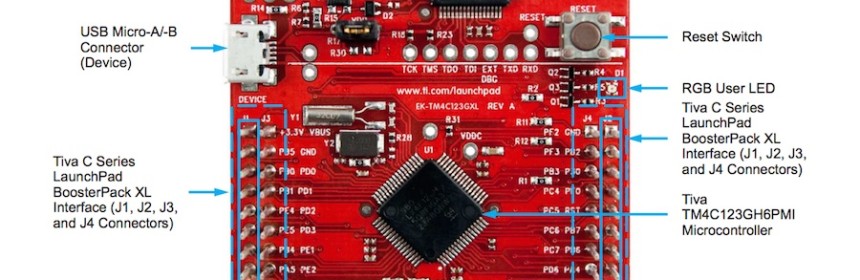
GPIOs are the basic interfaces of any microcontroller. Without GPIOs we won’t have any other way to use a micro and it will be nothing more different than a chunk of well-fabricated silicon. Through them we can interface both transducers or sensors and actuators. We can also connect other devices like a display, external devices and so on. As with any ARM microcontroller, the GPIOs of TM4C12x Tiva C ARM microcontrollers are very elaborate, having many options that are usually unavailable in common 8-bit microcontrollers. The one we are interested in – the TM4C123GH6PMI – is a 64-pin micro with

Read more

PCB assembly at Elecrow

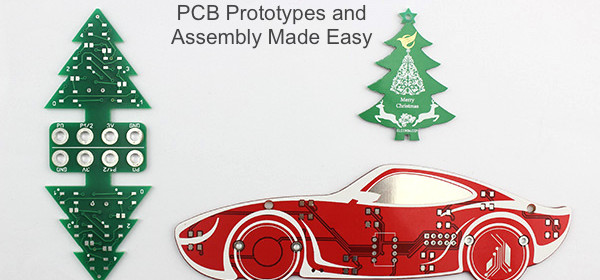
I have been asked a few times about where I make all of my PCBs and boards. So I thought I should share that experience here, which is what this blog post is about. In past 5 years, I have used PCB services from several companies, including Itead, Seeed, Elecrow, and Oshpark. There is no doubt that the Oshpark PCBs are far superior than the first 3 Chinese vendors. The downside of Oshpark is the cost of manufacturing is much higher, specially for larger size boards. Among Itead, Seeed, and Elecrow, I have never really noticed any differences in the

Read more

Display traffic status on a wall clock

Navigation apps are handy these days to get live traffic updates and minimize the wait time on road. This Arduino based traffic status display clock does the same thing but in a cool way, using colorful RGB LEDs. It’s built with an ordinary wall clock and 12 RGB LEDs installed around the clock. The color changes based on the traffic condition. The Arduino board receives live traffic information using 1sheeld and Google Distance Matrix API. 1sheeld is a bluetooth-enabled shield and acts as a bridge for Arduino to access the smart features of the smartphone as well as allows to use the smartphone as various

Read more
« Older Entries Recent Entries »