ESP8266 Twitter Client
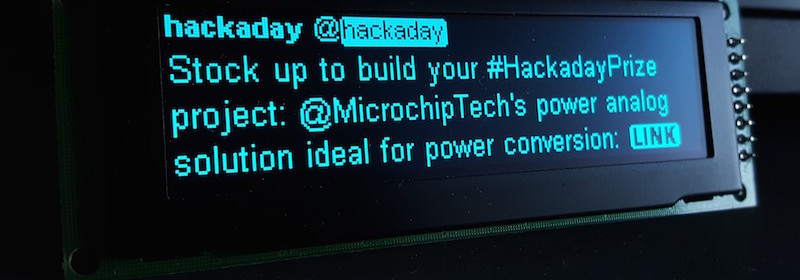
Andrei Mehiläinen shared his ESP8266-based Twitter Client project that is built using a 256×64 OLED (SSD1322 based) display. It connects directly to Twitter, so no third-party proxy services are used. The device connects to user stream and displays all the incoming tweets for that user. This basically means the same tweets the user would see on her Twitter main page. Additionally, a track paramter can be set to include tweets containing specified keywords. The tweet currently shown on the display can be retweeted, liked and shared by sending link to it in direct message. This way user can easily access shared

Read more
ESP8266 Space Invaders

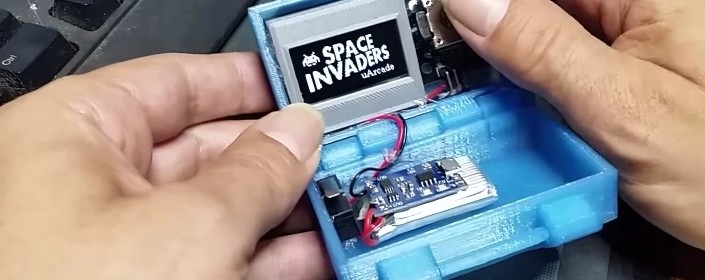
Tobozo Tagada incorporated the uArcade Space Invaders game (Arduino playform) to ESP8266 with a nice buckle box enclosure. It uses a WeMOS D1 Mini Pro board for ESP8266 and a SH1103 based 1.3inch OLED screen for display. The original uArcade code can be found here.

Read more

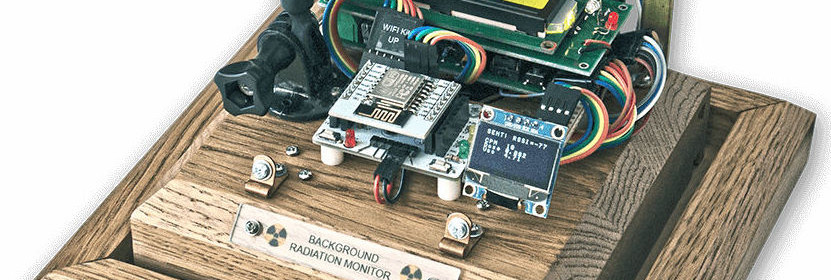
IoT enabled background radiation monitoring device

DIY Geiger counter projects are very popular among hobbyists. Geiger counters are used to detect beta particles and gamma rays radioactive emissions.They all use a Geiger-Muller (GM) tube, which is a glass tube filled with an inert gas such as helium, neon, or argon at low pressure, to which a high voltage is applied. The tube becomes conductive of electricity when it is impacted by a high-energy particle or photon. We have seen radiation monitor builds before based on 555 Timer IC and ESP8266. Brett Oliver‘s IoT enabled Radiation Monitor is Arduino-based and WiFi-enabled using ESP8266 and it continuously monitor the surrounding radiation and log the

Read more

Arduino Flappy Bird game

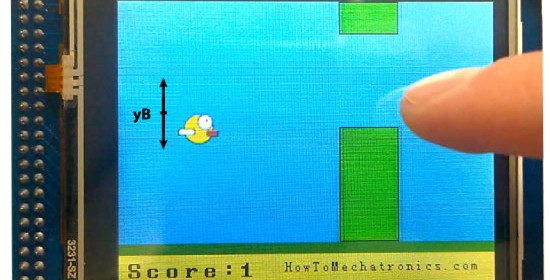
Dejan Nedelkovski from How To Mechatronics explains in this tutorial how to replicate the Flappy Bird game using an Arduino board and a TFT touchscreen. Here’s the working principle of game: we have 50 pixels wide pillars which move from right to left and every next pillar has a different random height. In order to make them moving, logically, after each iteration we need to clear the screen and redraw the graphic with the pillars at their new position. However, we cannot do that because of the low refresh rate of the screen, which would cause flickering of the graphics. In

Read more

ESP8266/ESP32 electronic sticky note using e-paper display

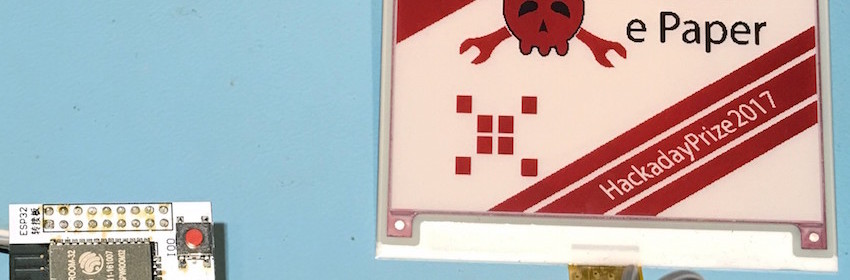
E-paper displays are new innovative commercial displays that resembles ink on paper, requires ultra-low power, and can retain the image displayed even in the absence of power. Frank Buss‘ entry to 2017 Hackaday Prize contest is a solar-powered e-Paper display driven by ESP32/ESP8266 and a sticky magnet on back that can be used as a sticky note on a fridge to display important information over WiFi. Frank writes, The amazing thing about ePapers is that the image lasts without power forever (I tested it for months), and the contrast is very good. The idea is to build a small device

Read more
« Older Entries Recent Entries »