Author Archives: R-B

Arduino-controlled prosthetic hand operates on verbal commands
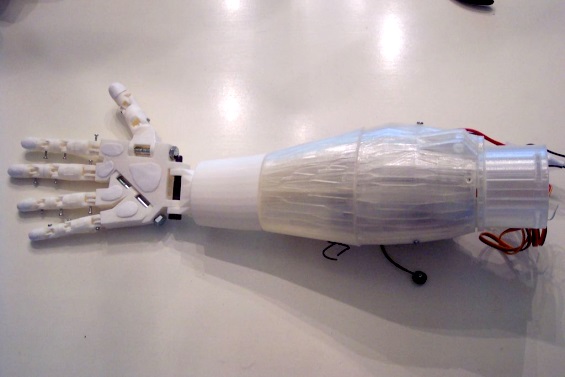
Here is a really cool instructable about making a prosthetic hand cum arm that operates on voice commands. The project uses a modified version of the InMoov hand/forearm to construct a five-finger prosthetic hand, which is controlled by an Arduino Uno along with a voice-recognition shield. This hand can perform 15 general hand gestures and actions that are used in daily life, such as pinch, peace, thumbs up, point, etc.
Arduino-controlled prosthetic hand operates with voice commands
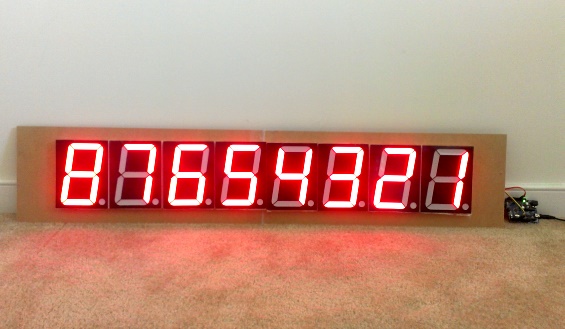
High-voltage seven segment LED display driver with SPI interface

Seven segment LED displays are known to be resource and power hungry. But because they are visually so charming and readable from a far viewing distance and at a much wider viewing angle as compared to any other electronic displays, they are still hugely popular. The required number of I/O pins to drive the LED segments can be reduced significantly by using an additional dedicated hardware. For example, the MAXIM’s MAX7219 device allows you to interface 8 pieces of seven segment LED modules using only 3 I/O pins of Arduino or any other microcontroller. You can find details on the use of MAX7219 to drive seven segment LED displays in my previous projects 4-digit serial seven segment LED display (SPI7SEGDISP4.40-1R), 8-digit serial seven segment LED display (SPI7SEGDISP8.56-1R), and double-row 4-digit seven segment LED display (SPI7SEGDISP8.56-2R). Since MAX7219 operates at 5V, its output can drive LED segments with forward voltage less than 5V. I have successfully used MAX7219 IC with 1.5″ seven segment LED modules that carry two regular LEDs in series per segment. Inside larger seven segment LED modules, the display segments are made of multiple LEDs connected in series and parallel to provide sufficient light to illuminate the segment, and as such they require a higher forward voltage and more current to operate. Recently, I have designed this display driver board that can be used as a bridge in between larger seven segment LED displays (with segment forward voltage up to 24V) and a 5V microcontroller. On its input side is MAX7219 which receives the display data from the host microcontroller through a 3-wire SPI bus.

Serial driver for large seven segment LED displays

Read more

Data recovery from a dead SD card using Arduino

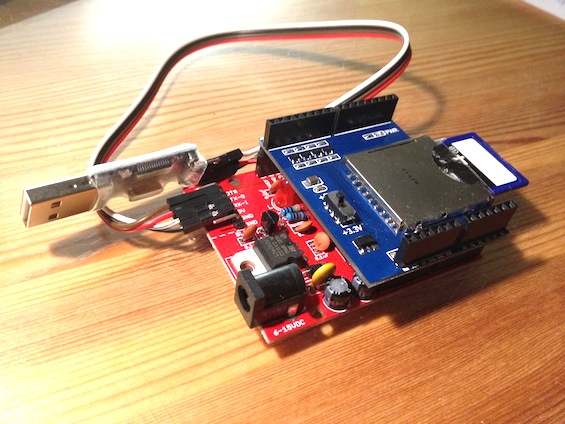
A Secure Digital (SD) memory card is the most standard memory card for use in mobile electronic devices, such as cell phones, digital cameras, GPS devices, and tablet computers. Communication with an SD card can be done in one of two modes: the SDIO mode and the SPI mode. By default, the SD card operates in the SD mode, which is much faster than the SPI mode and is thus more preferable in the portable devices for achieving high-speed data transfer. If you have a damaged SD card that contains valuable information, this example shows you might have a chance to retrieve most of your data through an SPI interface using an Arduino board.

SD data recovery using Arduino

Personal space invader alarm bow tie

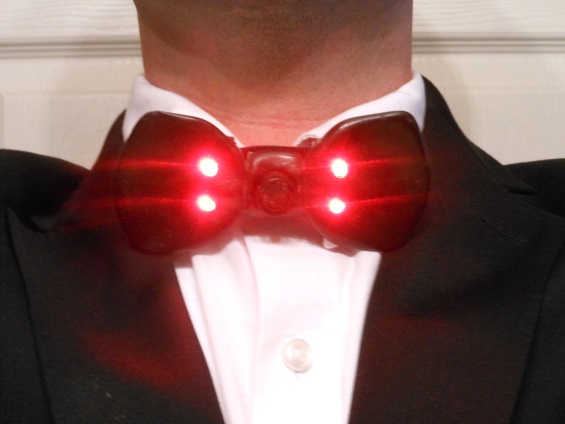
We all have an invisible boundary around our body, which we call personal space. We certainly don’t like anybody piercing through this boundary. This personal space defender bow tie is a simple and elegant way to defend your personal space bubble from being invaded by close talkers. When somebody gets too close to you it flashes red lights for a few seconds. If the invader stays there, the lights keep flashing. The project uses FLORA, an Arduino -compatible wearable microcontroller board from Adafruit.

Personal space defender tie

« Older Entries Recent Entries »