Author Archives: R-B

MikroElektronika releases their latest universal development board that supports multiple microcontroller architectures
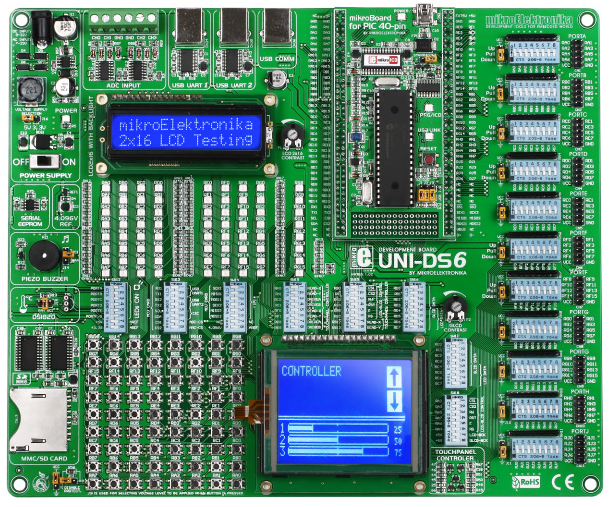
Mikroelektronika has released their latest version of universal development board, UNI-DS6, that supports eight different microcontrollers, namely PIC16F887, PIC18F8520, dsPIC30F6014A, Atmega128, CY8C27643, LPC2148, LPC2214, and AT89S8253. A separate mikroBoard for each of these microcontrollers are available, which can be inserted into the main development board so that you can perform experiments with your choice of microcontroller while the rest of the board remains the same. Each of the mikroBoards consists of an on-board programmer so no external programmer is required. The development board is fully featured with regulated power supply, external 12-bit ADC, USB-UART support, USB connector, serial EEPROM, standard LCD socket, GLCD with touch panel support, SD card slot, tons of LEDs and tact switches and many more.
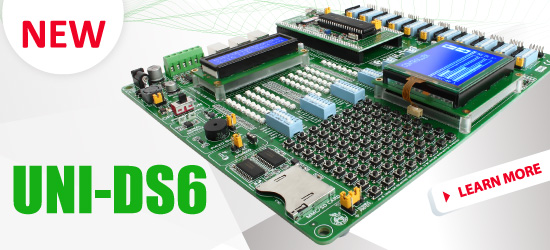
MikroElektronika releases a new universal development board
Read more

Getting started with PIC18F Microcontrollers

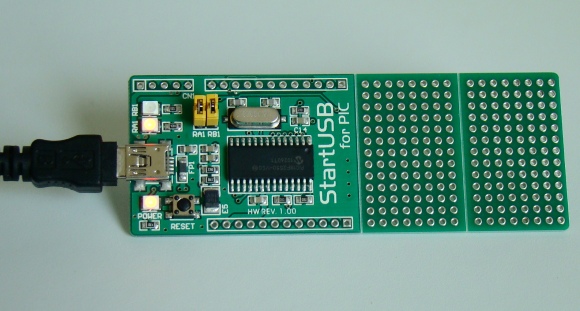
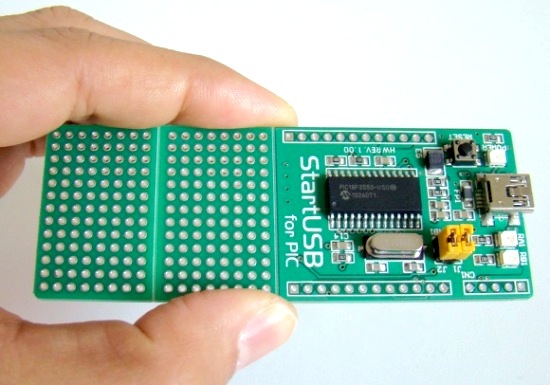
After writing quite a bit of experimental tutorials on PIC16F series of microcontrollers, I thought of moving forward to the enhanced-range family of PIC microcontrollers, the PIC18F, which was introduced by Microchip in late 90s. Although PIC16F series are excellent general purpose microcontrollers, certain limitations have emerged, such as, they have limited program and data memory, their stack size is small, and all the interrupt sources have to share a single interrupt vector. Their limited instruction set also doesn’t provide direct support for more advanced peripherals interfaces like USB and CAN. The basis of the PIC18F Series is to address the issues that limit the PIC16F series. The PIC18F series of microcontrollers has larger instruction set, more memory, bigger stack, more external interrupts, higher speed, enhanced I/O port architecture, and many more features that we will be exploring in upcoming tutorials. I have decided that I am not going to spend much time on soldering and making my own prototyping board for PIC18F microcontroller as I did for PIC16F. I am going to use StartUSB for PIC board from mikroElektronika for writing these tutorials.

StartUSB for PIC board from mikroElektronika

Read more

A Beginner’s data logger project using PIC12F683 microcontroller

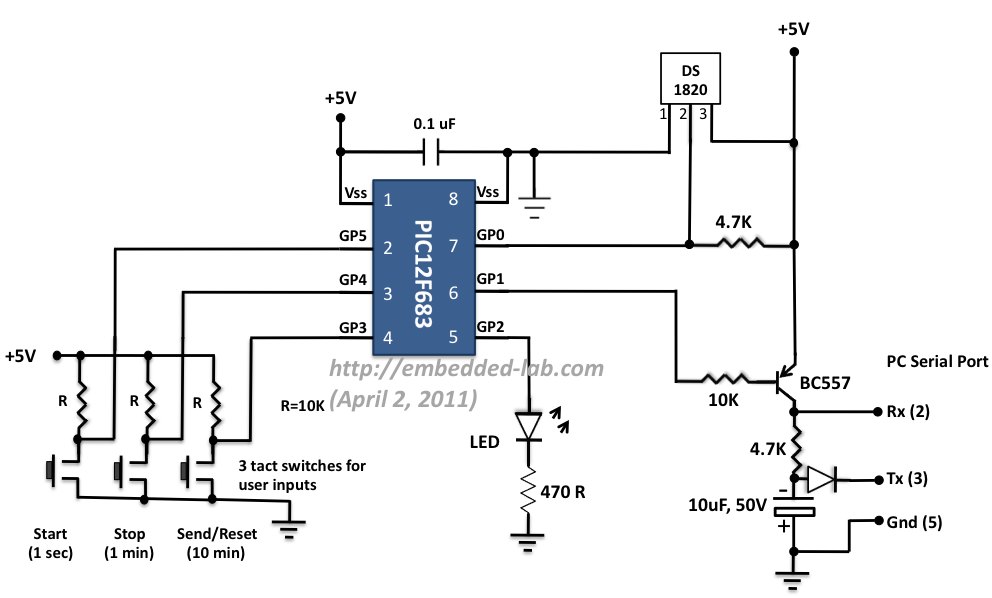
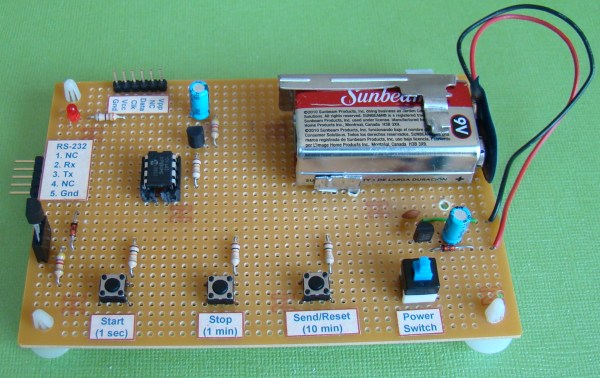
It is a very simple data logger project based on PIC12F683 microcontroller. The microcontroller reads temperature values from a temperature sensor on a regular interval basis and stores them into its internal EEPROM memory. The recorded temperatures can be later transferred to a PC through serial interface. I originally published this project on electronics-lab.com last summer. I thought this could be a very good learning project for beginners, and so I am posting it here for Embedded Lab’s readers too.

Finished temperature logger powered from a 9V battery

Read more

DIY remote controlled turret gun

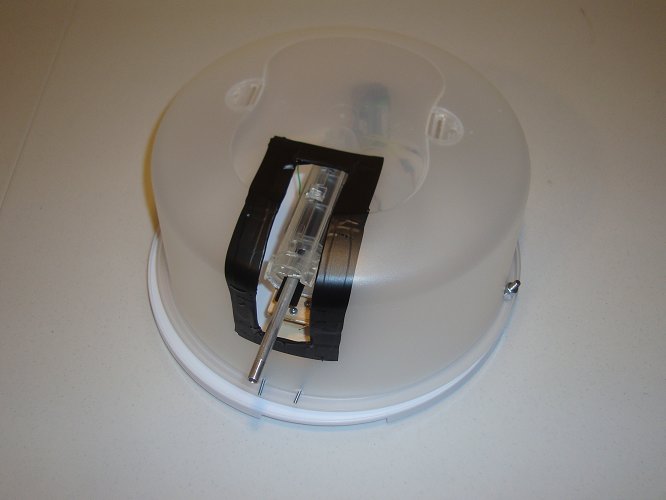
Chris (@ pyroelectro.com) built his own airsoft turret gun that can rotate, tilt up and down, and fire very precisely. It is controlled through IR signals from a generic TV remote. The PIC18F4520 microcontroller is the brain of this project, which interprets the received IR signals from the TV remote and control the motion and the firing mechanism inside the gun. It is able to rotate upto 180° or more left and right, and the barrel can go up to 45° towards the sky.

Turret Gun made by Chris at pyroelectro.com

Read more

mikroElektronika is launching LibStock soon

MikroElektronika has posted an announcement today on their news blog site about providing a dedicated platform (Library Stock) for the user community to publish their ideas that could be in various forms including projects, source codes, schematics and tutorials. Since I am a big fan of MikroC pro for PIC, I thought I should share my views on this topic.

Library Stock from mikroElektronika

Currently, they do have a separate Projects page under their main domain name (www.mikroe.com), and a lot of projects have already been posted there. Once I browsed some of them, and I realized most of them are just source codes without sufficient details on the functioning part of the projects. Some of them even don’t have circuit diagrams. I bet even experienced embedded programmers would have problems in understanding those projects by just looking at the source code and no hardware details. MikroElektronika might have realized this too and thought of providing a better content management system for the contribution from user communitiy.

Here are my few suggestions for Library Stock:

  1. Documentation is the key of a good project. Therefore, whenever users submit their projects they should at least provide three things: a brief description of what it is about and how it works, the complete circuit diagram,  and the required firmware for the project. This will help readers to understand the project and implement similar scheme in their projects.
  2. If the description of the project, circuit diagram and other images are made viewable online for the readers, it would reduce their searching time for what they are actually looking for. Therefore, instead of providing everything of the project in a zipped file, a blogging type platform where registered users can actually write about their projects, would be better.
  3. A search feature would be helpful to find the right projects based on entered keywords.
  4. Separate categories for Projects, Library Routines, Theory, Tips and Tricks, Product Reviews, etc.
  5. A discussion forum or comment section to share ideas and interact with the authors of the projects.
  6. If MikroElektronika is expecting quality contents for LibStock, they should think about giving some incentives to their writers too. I liked their idea of “SELLING the libraries and projects over Libstock”. Some other options could be: organizing design contests on annual or semiannual basis, hiring people to write some good quality projects using their products, providing free samples of their products to writers, etc.
« Older Entries Recent Entries »