Real-time weather dashboard using littleBits

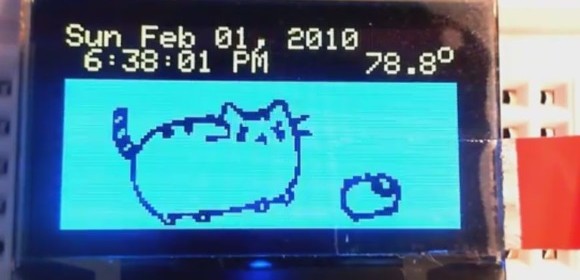
littleBits is a well-known development platform for rapid learning and prototyping with electronics. This real-time weather dashboard is built using the same platform to monitor current and forecasted weather information. At the heart of this project is the cloudBit, which is a single-board computer running Linux from a SD card. The cloudBit also features a WiFi adapter on board, which allows you to connect any device to the internet. For this project, the weather data for a particular location are retrived from Weather Underground, and are sent to the cloudBit using littleBits cloud APIs. The cloudBit processor then convert the weather

Read more

STM32 – Prior to Start
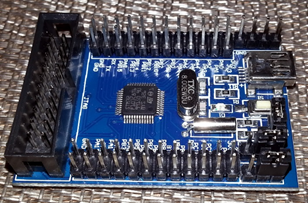
STM32 ARM-based micros from STMicroelectronics pack high density resources than any other conventional microcontroller. They are also high speed devices, operating typically at 72MHz and beyond. Despite several advanced features and heavy resources, they turn out to be misfortunes for beginners who wish to play with them. Available in market are several cool STM32 boards but most of them are not well documented. The aim of this document is to address some common FAQs. Typically most people ask the following question: How to program the STM32 micro embedded in my development board? What tools do I need to get started?

Read more
A simple IoT demo using ESP8266 and Arduino

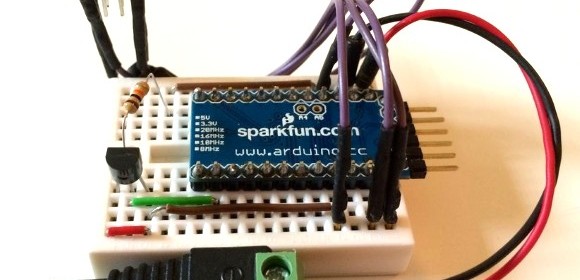
ESP8266 is a highly integrated serial-to-wifi tranceiver chip that can be used to connect any microcontroller with a serial port to a WiFi network for Internet of Things (IoT) applications. The best part of it is that the breakout board for this chip costs only $3 on Ebay, and the chip itself can be programmed/customized for a complete IoT solution. This instructable describes a simple demo of using the ESP8266 and Arduino to send temperature measurements to a remote webserver using WiFi connection. In this example, the remote server is ThingSpeak and the tenperature sensor used is Maxim’s DS18B20.

Read more

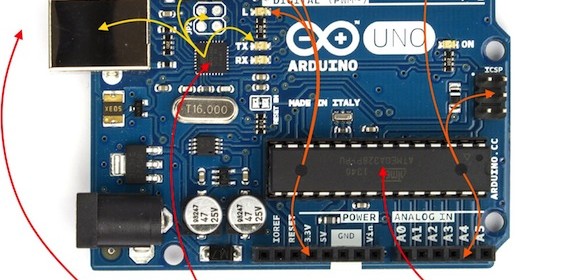
HootLoader2 allows you to customize the ATMega16u2 USB-Serial bridge on Arduino Uno

We know that the newer Arduino Uno boards have two programmable microcontrollers: one is Atmega328, which is an actual Arduino processor, and the second one is Atmega16U2, which is flashed to operate as an USB-Serial converter. Nico’s HootLoader2 allows you to reprogram the Atmega16U2 with your custom sketches to add more functionalities. HoodLoader2 replaces the DFU bootloader with a CDC bootloader and comes with full Arduino compatible USB-HID core, and CDC Serial. You can also use the 7 i/o pins of the Atmega16u2 on board.

Read more

Running LED dice

Tons of LED dice projects with different output forms have been published online. The most common output configuration in those projects is a 3-1-3 setup (two rows of three LEDs and one LED at in the middle) of seven LEDs, which simulates the actual patterns of dots found on the six faces of a traditional dice. When it is rolled, one or more LEDs are selectively turned on to display a random number between 1 to 6. This project is about a similar LED dice but with a slightly different output form. It uses 6 LEDs which are arranged in

Read more
« Older Entries Recent Entries »